Best Energy Chews for Running: 10 Options for Trails and Ultras
Compare 10 of the best energy chews for running, including Precision Fuel, SiS, TORQ, HIGH5 and GU. Carbs, caffeine, texture and honest trail advice.
Affiliate disclosure: This article contains Amazon affiliate links. Trail Running Planet may earn a commission if you buy through these links, at no additional cost to you. As an Amazon Associate I earn from qualifying purchases.
The quick answer
Precision Fuel PF30 Chews are our best overall research pick for trail running. Each packet provides a simple 30g carbohydrate serving with a mild flavour. SiS Beta Fuel Energy Chews suit runners wanting more carbohydrate in one packet, HIGH5 Energy Gummies are a lower-cost starting point, and TORQ Energy Jellies make it easy to eat in small 5g portions.
Chews are useful when you dislike gel texture or want to spread fuel across an hour. They are easy to carry and less messy than gels, but chewing can be awkward while climbing hard or breathing heavily.
Our testing position
Trail Running Planet has used products from several brands in this guide, including Precision Fuel and TORQ, but we have not personally tested every specific chew below.
The rankings are research picks based on:
- Carbohydrate content
- Portion size
- Texture
- Caffeine options
- Ease of carrying
- UK availability
- Public Amazon popularity signals
- Relevance to trail and ultra running
Amazon reviews are treated as popularity signals rather than proof of product quality.
Best running chews at a glance
| Energy chew | Best for | Carbohydrate | Caffeine | Format |
|---|---|---|---|---|
| Precision Fuel PF30 Chew | Best overall research pick | 30g per packet | None | Soft chew |
| SiS Beta Fuel Energy Chew | Highest-carbohydrate serving | Around 45–46g | None | Segmented chew |
| TORQ Energy Jellies | Small regular portions | 30g per packet | None | Six jellies |
| HIGH5 Energy Gummies | Best value | 21g per packet | None | Six gummies |
| Precision Fuel PF60 Chew Bar | Long ultras | 60g per bar | None | Large chew bar |
| Skratch Labs Energy Chews | Softer fruit-based option | Check packet | Some flavours | Soft drops |
| CLIF BLOKS | Flavour and caffeine choice | Check packet | Some flavours | Six blocks |
| GU Energy Chews | Established sports option | 22g per serving | Some flavours | Small gummies |
| OTE Energy Chew | Simple one-piece format | 23g per bar | None | Divisible bar |
| Jelly Belly Sport Beans | Most like ordinary sweets | 25g per packet | Some versions | Small beans |
Nutrition and recipes can change. Check the current packet before planning a race.
1. Precision Fuel PF30 Chew
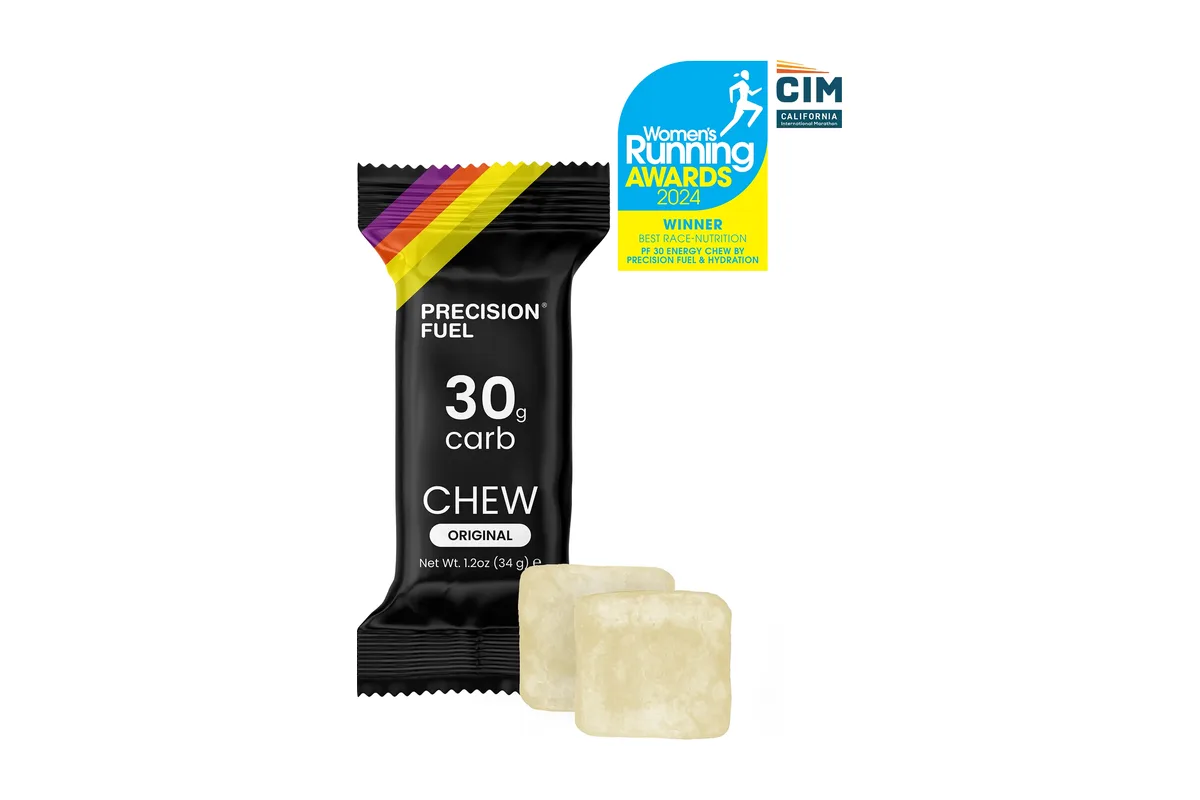
Best overall energy chew for trail running
- Carbohydrate: 30g per packet
- Caffeine: None
- Format: Soft chew
- Dietary information: Vegan
- Testing status: Research pick
PF30 is the easiest chew in this guide to build into a straightforward plan. One packet provides 30g, two give you 60g and three provide 90g.
The mild flavour can be useful late in an ultra when strong fruit or dessert flavours become difficult. The chew is more substantial than a gel but less dense than a conventional cereal bar.
Good for: simple carbohydrate counting and long runs.
Watch out for: chewing is still awkward at high intensity.
2. SiS Beta Fuel Energy Chew
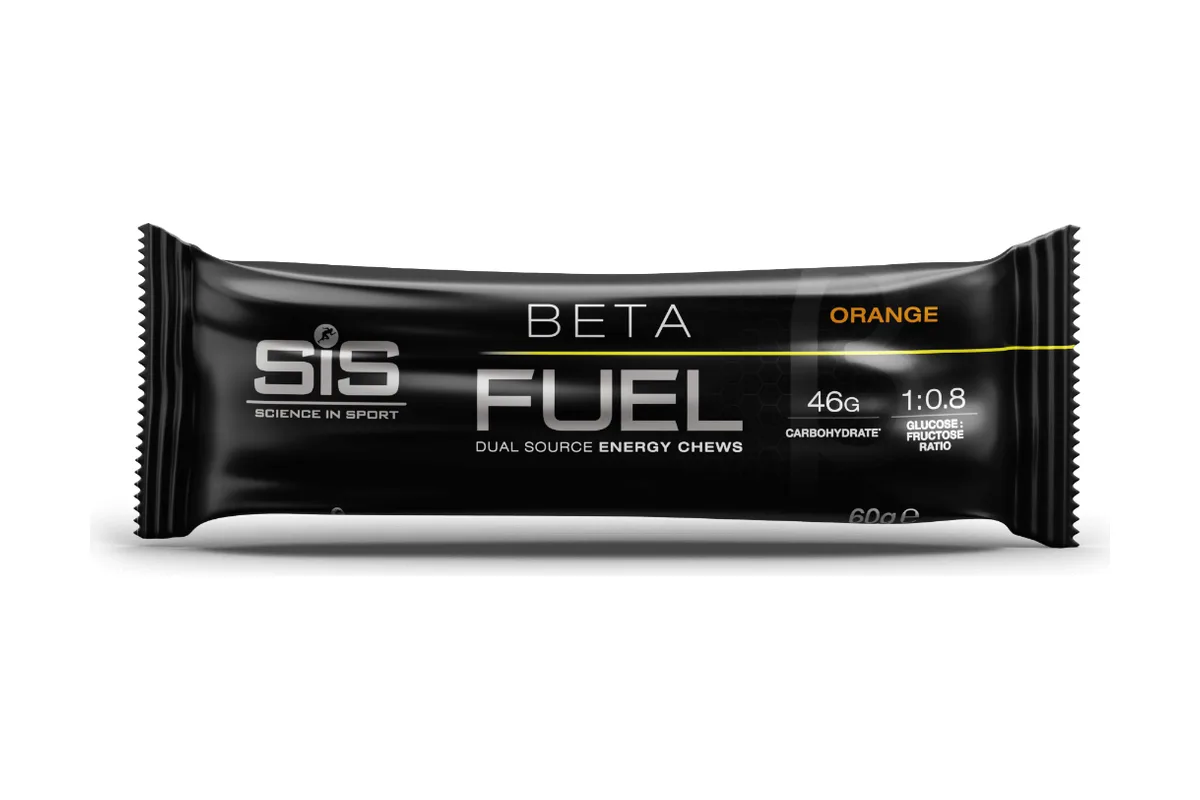
Best high-carbohydrate energy chew
- Carbohydrate: Around 45–46g per packet
- Caffeine: None in the standard version
- Format: Segmented chew
- Testing status: Research pick
SiS Beta Fuel gives you considerably more carbohydrate than most smaller gummy packets. The chew can be eaten as one large serving or divided into smaller pieces.
For many runners, breaking it up will be the more practical approach. A full 45–46g solid serving can feel substantial on a hard climb.
Good for: high hourly carbohydrate targets and fewer wrappers.
Watch out for: large serving and potentially sticky texture.
3. TORQ Energy Jellies
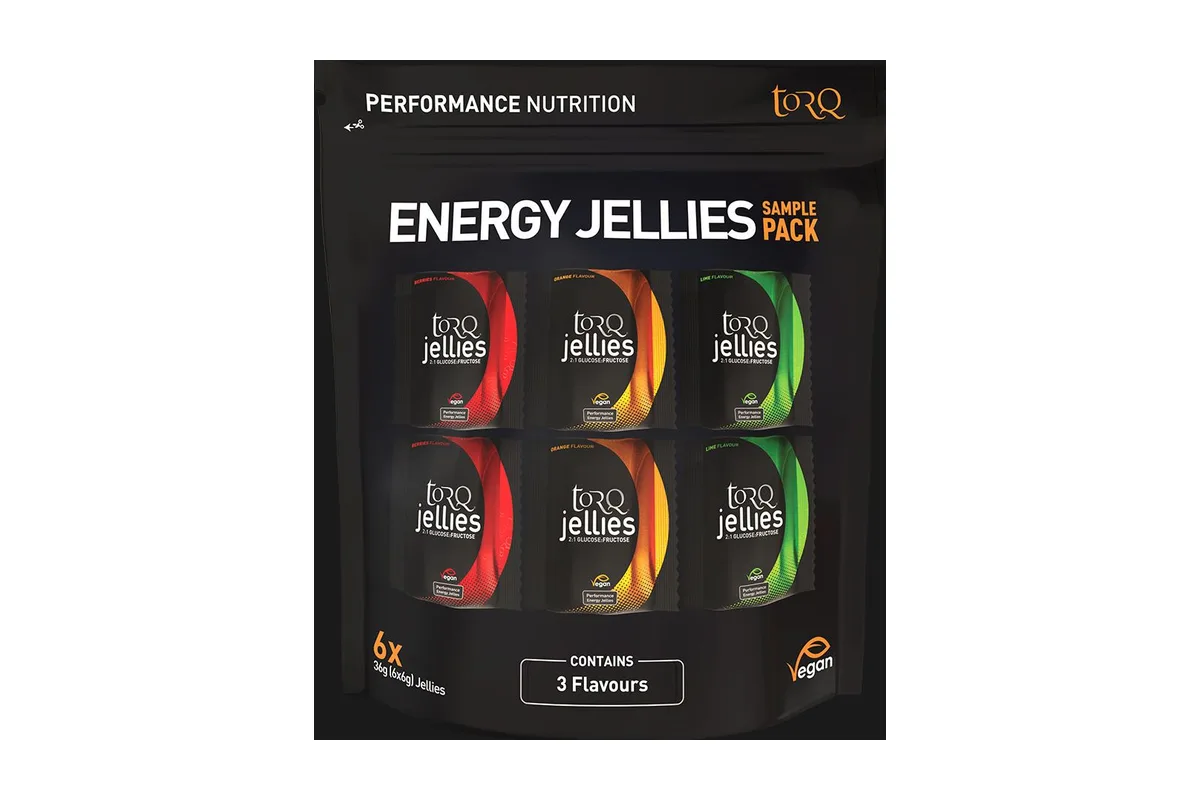
Best for eating little and often
- Carbohydrate: 30g per packet
- Carbohydrate per jelly: 5g
- Caffeine: None
- Format: Six small jellies
- Testing status: Research pick
Each packet contains six jellies, with 5g of carbohydrate in each piece. That makes the product easy to spread across an hour.
You could eat one jelly every ten minutes or two every twenty minutes. The visible pieces also make it easier to see how much of the packet remains.
Good for: grazing in small portions and runners who forget to fuel.
Watch out for: open packets can be fiddly in rain or with gloves.
4. HIGH5 Energy Gummies
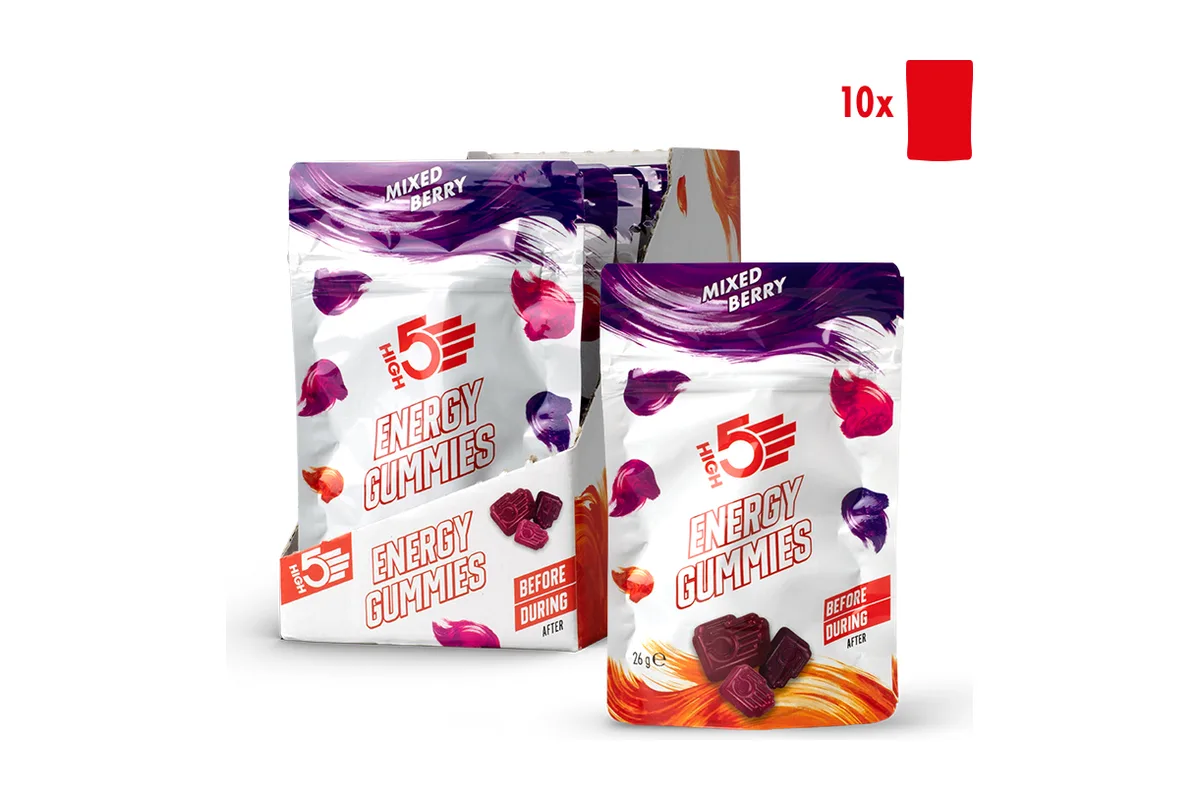
Best-value running chews
- Carbohydrate: Around 21g per packet
- Caffeine: None
- Format: Six small gummies
- Testing status: Research pick
HIGH5 is a sensible way to find out whether chews suit you without paying premium prices. The packet contains less carbohydrate than Precision Fuel or TORQ, so count it accurately.
Three packets provide roughly 63g rather than 90g.
Good for: lower-cost training fuel and runners trying chews for the first time.
Watch out for: lower carbohydrate per packet than the packet size may suggest.
5. Precision Fuel PF60 Chew Bar
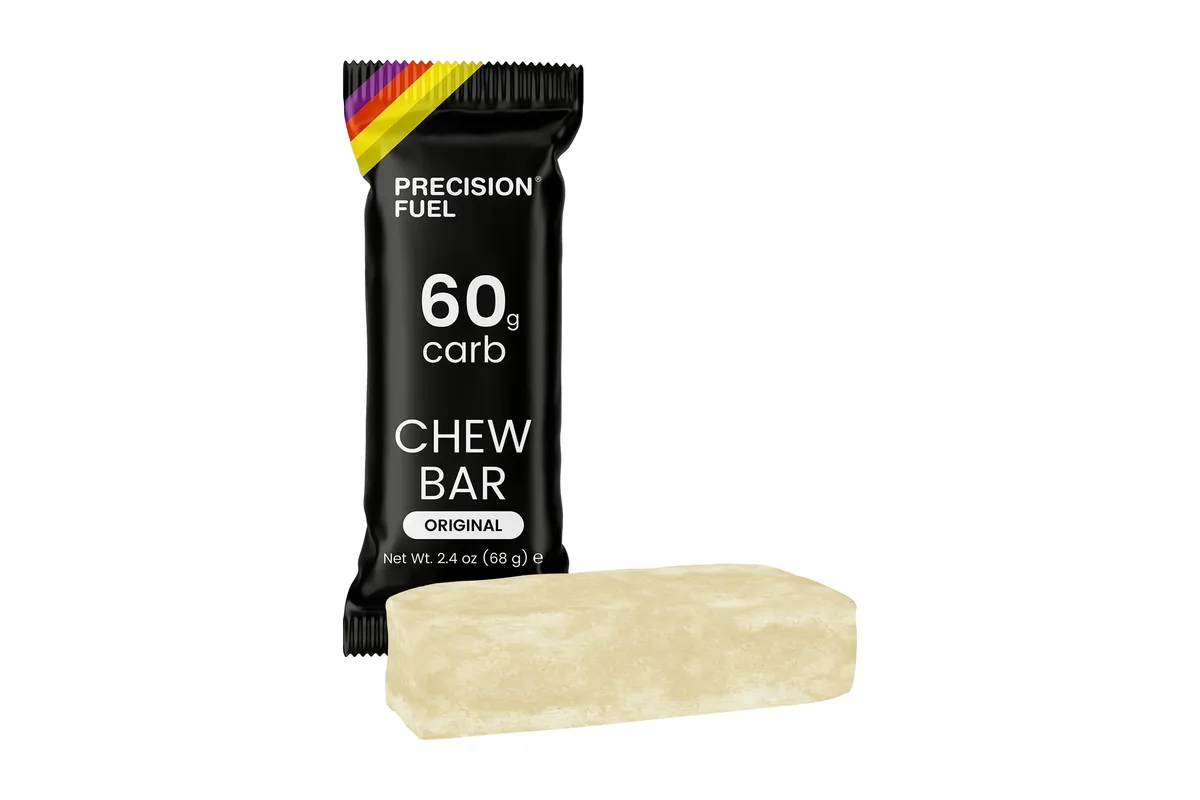
Best chew for long ultras
- Carbohydrate: 60g per bar
- Caffeine: None
- Format: Large chew bar
- Dietary information: Vegan
- Testing status: Research pick
PF60 provides 60g of carbohydrate in one bar. It is best divided into two 30g halves rather than eaten as one large serving.
The high carbohydrate density helps reduce wrapper count and can be useful during slower ultra sections or long hikes.
Good for: long ultras and runners carrying large amounts of fuel.
Watch out for: too substantial for hard running or fast races.
6. Skratch Labs Energy Chews
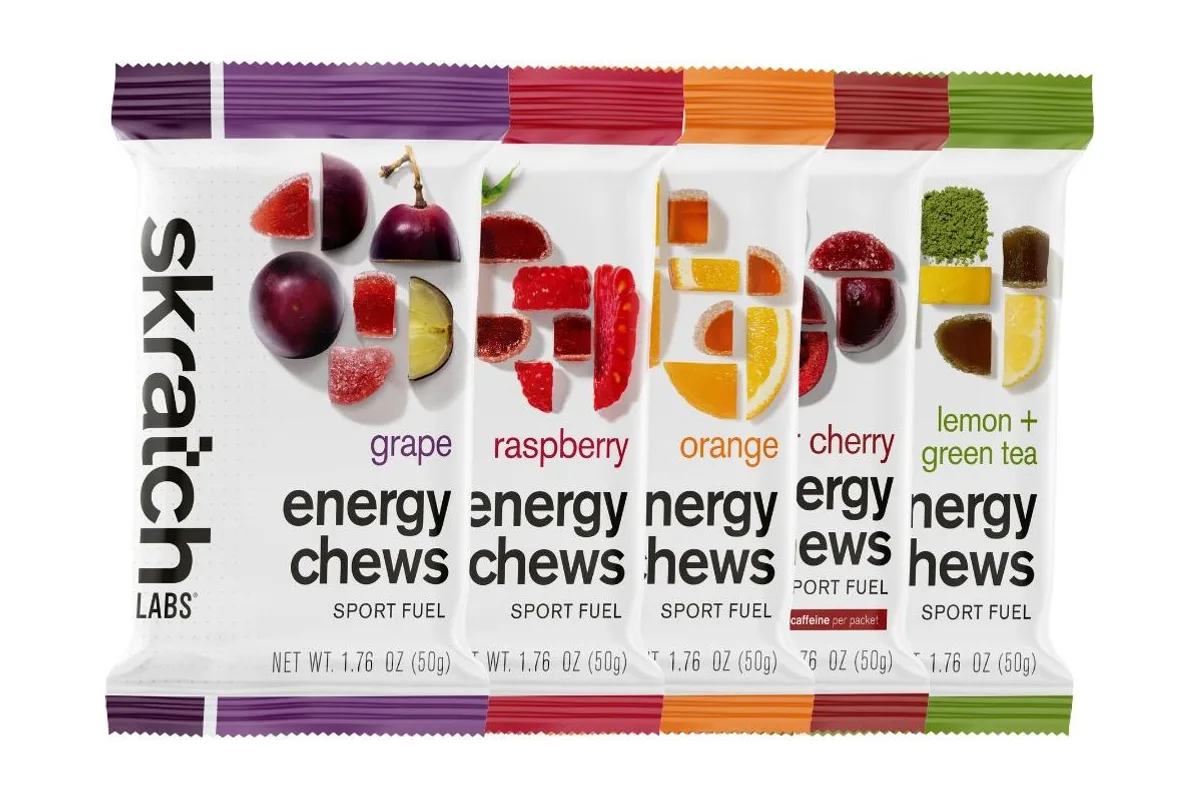
Best softer fruit-based chews
- Carbohydrate: Check the current packet and serving
- Caffeine: Available in selected flavours
- Format: Soft drops
- Testing status: Research pick
Skratch chews are designed to feel softer and wetter than many conventional sports gummies. Real fruit flavouring and a less dense texture may make them easier to eat when your mouth is dry.
Be careful with serving sizes. A retail pouch may contain more than one listed serving.
Good for: runners wanting a softer fruit texture.
Watch out for: serving and packet sizes can be confusing.
7. CLIF BLOKS
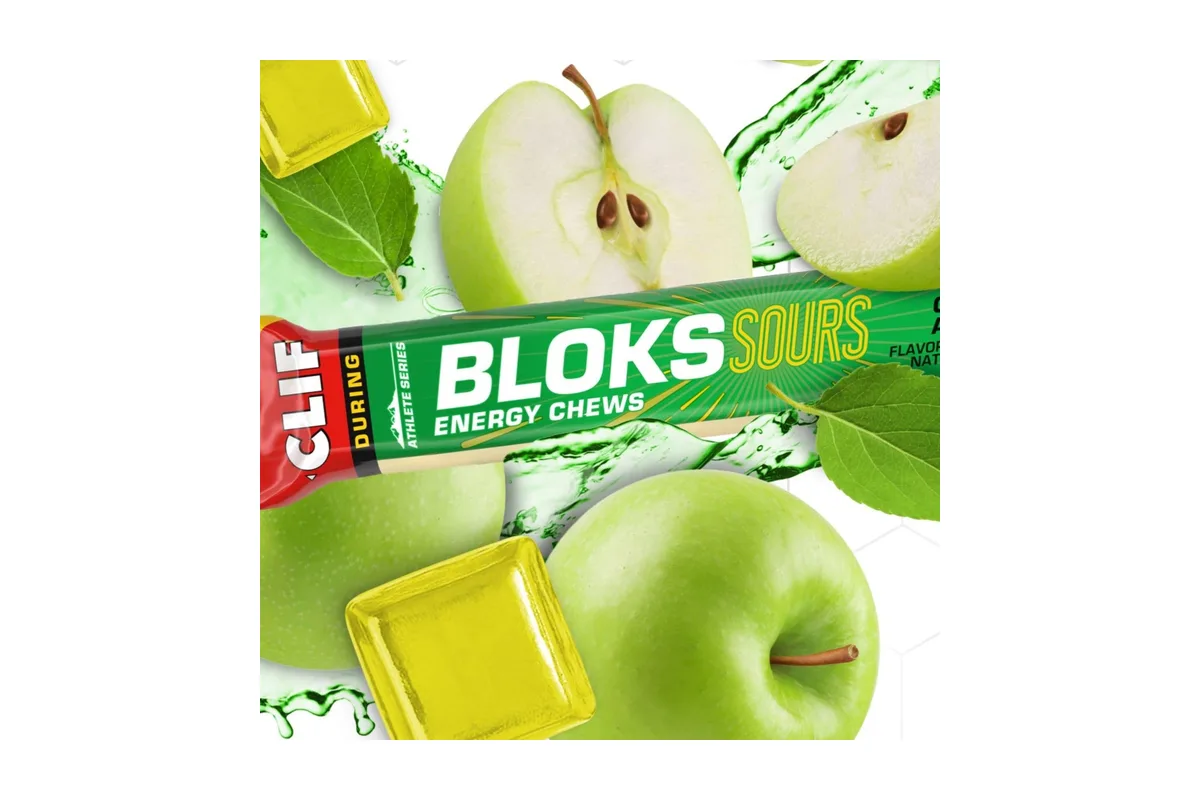
Best for flavour and caffeine choice
- Carbohydrate: Varies by serving and flavour
- Caffeine: Available in selected versions
- Format: Six large blocks
- Testing status: Research pick
CLIF BLOKS are larger than most gummy-style products and come in a tube that lets you push out one piece at a time.
The range includes caffeinated and non-caffeinated flavours. Nutrition and caffeine vary, so read the exact packet before using them in a plan.
Good for: controlled portions and runners wanting a caffeine option.
Watch out for: strong flavours and variable caffeine.
8. GU Energy Chews
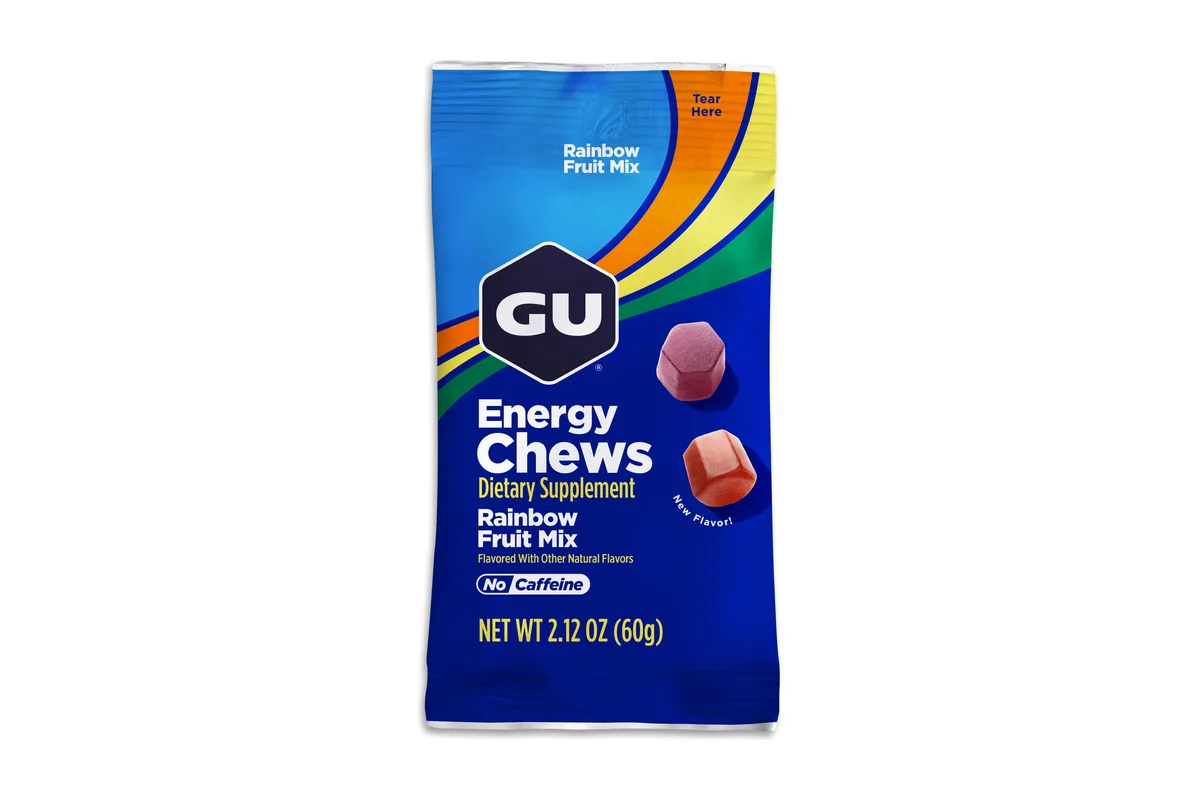
Best established sports-nutrition chew
- Carbohydrate: Around 22g per serving
- Caffeine: Available in selected flavours
- Format: Small gummies in a resealable pouch
- Testing status: Research pick
GU Energy Chews use small pieces and a resealable pouch, making them easy to eat gradually. The pouch commonly contains more than one serving, so calculate by the whole packet rather than assuming the front-panel number covers everything inside.
Good for: small portions and runners already using GU gels.
Watch out for: easy to miscount servings and caffeine varies.
9. OTE Energy Chew
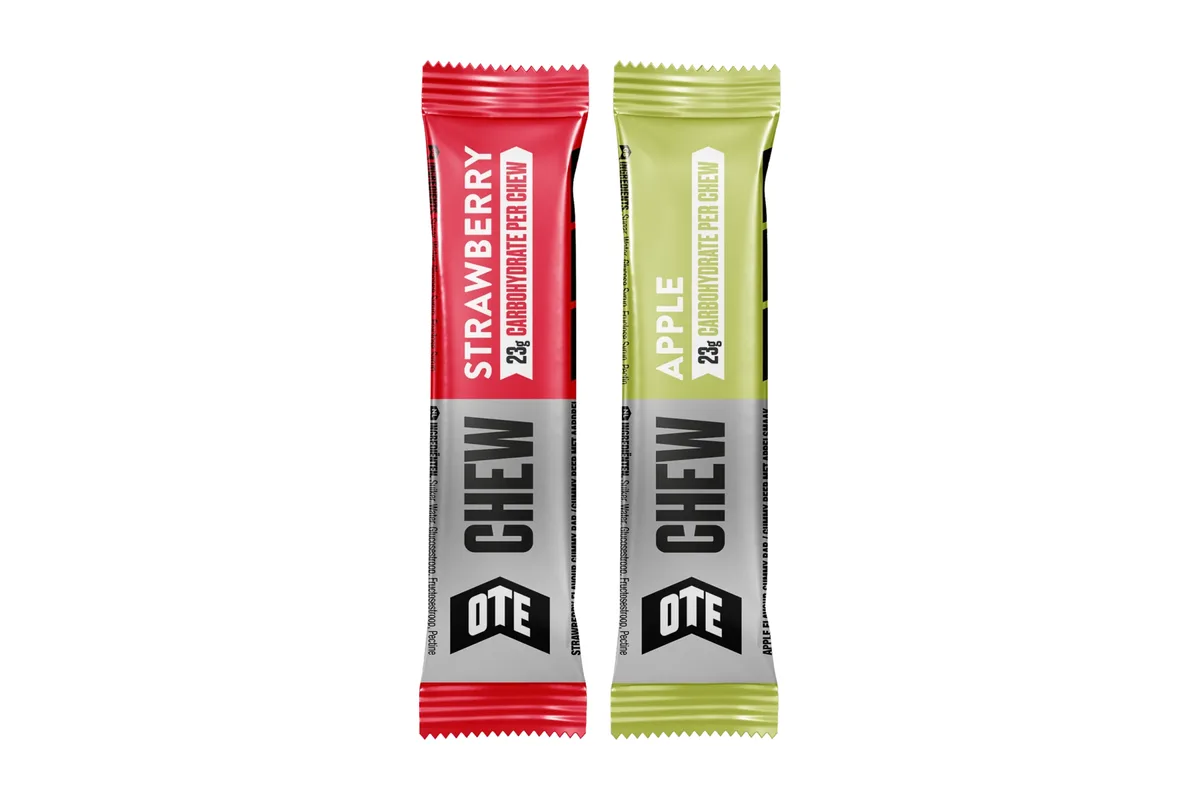
Best simple one-piece chew
- Carbohydrate: Around 23g per bar
- Caffeine: None
- Format: One chew divided into sections
- Dietary information: Vegan and gluten-free options
- Testing status: Research pick
OTE uses a single bar divided into smaller sections rather than loose gummies. That reduces the risk of spilling pieces into a vest pocket.
The 23g portion is not as neat for hourly calculations as a 30g product, but it is easy enough to build into a plan.
Good for: compact one-piece fuel and runners who dislike loose gummies.
Watch out for: smaller public review base than the biggest brands.
10. Jelly Belly Sport Beans
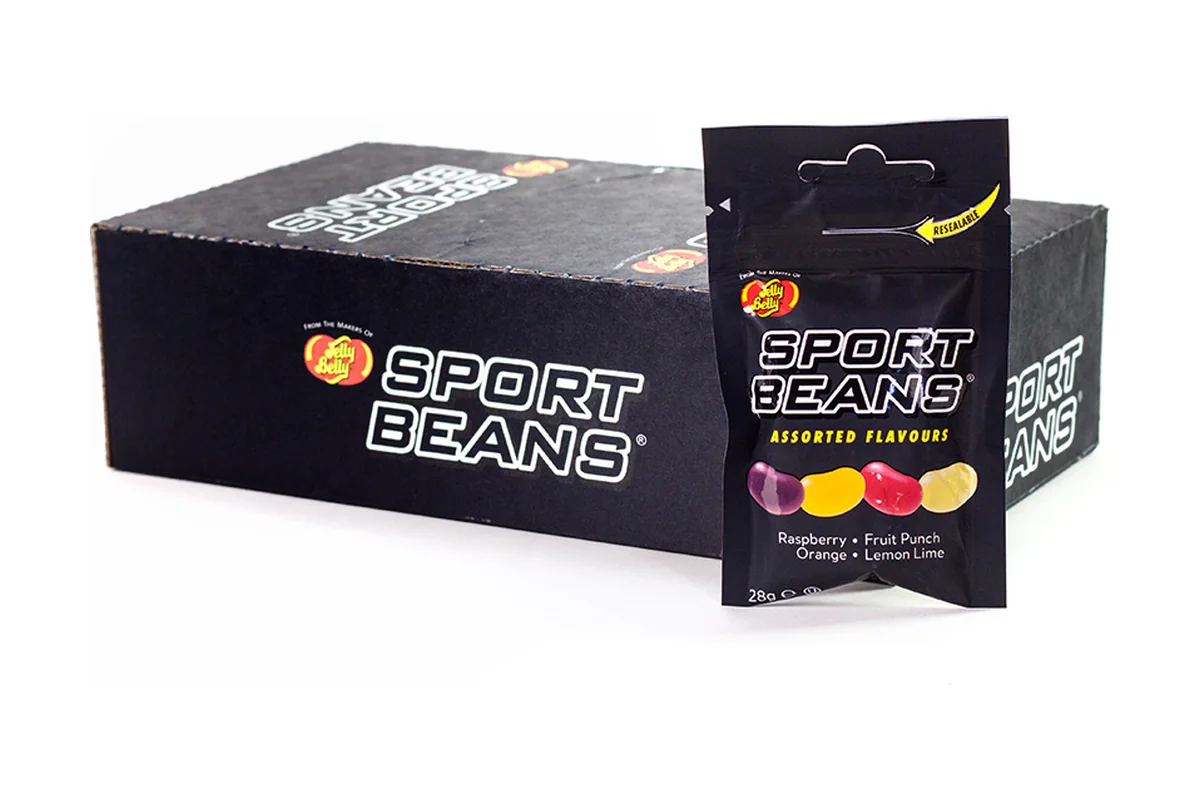
Best if you prefer ordinary sweets
- Carbohydrate: Around 25g per packet
- Caffeine: Available in selected versions
- Format: Small jelly beans
- Testing status: Research pick
Sport Beans are the closest product in this guide to ordinary sweets. The familiar texture and small pieces make them easy to graze, and the packet is straightforward to carry.
The downside is tracking intake. It is easy to eat a few without knowing how much carbohydrate you have taken.
Good for: runners wanting a familiar sweet texture.
Watch out for: easy to spill, lose or eat without counting.
Are chews better than gels?
Neither is automatically better.
Choose chews when you want:
- Small controllable portions
- Less sticky mess
- A more solid texture
- A break from gels
- A resealable packet
Choose gels when you want:
- Minimal chewing
- Easier intake at high intensity
- Compact servings
- Fast swallowing on steep climbs
Many trail runners use both.
How many chews should you eat per hour?
Work in grams of carbohydrate rather than packets or individual sweets.
A broad starting framework is:
- 30–60g per hour for endurance exercise lasting around one to two-and-a-half hours.
- Up to about 90g per hour during longer events for runners who have practised that intake.
Example plans
Around 30g per hour
- One PF30 packet: 30g.
- One TORQ packet: 30g.
- One Sport Beans packet: around 25g.
Around 60g per hour
- Two PF30 packets: 60g.
- Two TORQ packets: 60g.
- One PF60 bar: 60g.
Count carbohydrate from drinks, gels, bars and ordinary food as well.
Do you need water with chews?
Water makes most chews easier to eat and swallow. Dry mouth is common during hard running, hot weather and long events.
A product that feels soft at home may become sticky or difficult when you are breathing heavily.
Can ordinary sweets replace energy chews?
Yes. Jelly babies, wine gums and similar sweets provide carbohydrate and can be much cheaper.
Specialist chews may add clearer portioning, electrolyte or caffeine options, exercise-friendly packaging and defined carbohydrate blends. They are convenient, not mandatory.
How to carry chews
- Open difficult packets before the start.
- Divide large bars into planned portions.
- Keep open products in one dedicated pocket.
- Test texture in cold weather.
- Store empty wrappers securely.
Frequently asked questions
What are the best energy chews for running?
Precision Fuel PF30 is our best overall research pick because each packet provides a simple 30g serving. SiS Beta Fuel suits higher carbohydrate targets, while HIGH5 is a lower-cost option.
Are chews good for trail running?
Yes. They add texture variety and allow small regular portions, but can be awkward during intense climbs.
When should I start eating chews?
For a long run, begin before you feel low on energy. Many runners start during the first 30–45 minutes and continue at regular intervals.
How many chews equal one gel?
It depends on the product. Compare grams of carbohydrate rather than packet size.
Can chews upset your stomach?
Yes. Large carbohydrate servings, unfamiliar ingredients, intensity and dehydration can all contribute.
Are energy chews vegan?
Many are, but check the exact product because recipes change.
Final verdict
Precision Fuel PF30 is the strongest all-round starting point. Choose SiS Beta Fuel for a larger serving, TORQ Energy Jellies for six small portions, or HIGH5 Energy Gummies if price matters most.
For a long ultra, PF60 provides efficient solid carbohydrate, but it is better suited to slower sections than hard climbing.
The best chew is the one you can open, eat and tolerate when you are tired—not simply the one with the highest carbohydrate number.