Best Anti-Chafe Products for Running and Ultras
BodyGlide Original for most runs, Squirrel’s Nut Butter for long wet ultras, Vaseline if you want to spend nothing. Where runners chafe, when to apply, and seven more considered.
Affiliate disclosure: links to Amazon in this guide are affiliate links. If you buy through one we earn a small commission at no extra cost to you. It makes no difference to which product we tell you to buy.
The short version
Chafing starts as a small itch at mile eight and ends races at mile forty. Every product here works if it's on the right skin before you set off. Three of them cover almost everyone.
Buy this: BodyGlide Original — for most runners, most runs. A dry stick that goes on like a deodorant, so you're not putting fingers in a pot at six in the morning, and it lives in a vest pocket or a car door without leaking. Sweat-resistant enough for anything up to a long day out. The one thing to watch is a thin application: it's easy to skim over the exact bit of thigh that was going to rub.
Long or wet ultras: Squirrel's Nut Butter — when you'll be reapplying at a checkpoint with wet feet and eight hours to go. A salve rather than a stick, so it goes on thick, stays put through water, and works on feet as well as everywhere else. The pot version is messy in a vest; buy the stick, or decant a race portion into something small.
Spend nothing, or nearly: Vaseline — because it works, it's in every chemist and probably already in your bathroom. A strong moisture barrier that's greasy, stains kit and is horrible to handle on the move, which is why the two above exist. Sachets in a drop bag or first-aid kit are a good idea regardless of what you use before the start.
Still not sure? Want something that stays on through a wet race without reapplying: 2Toms SportShield, a roll-on that dries to a slick film. It's your feet specifically: BodyGlide Foot Glide. Large areas, or a multi-day event: Chamois Butt'r. All three are further down.
We haven't used all ten of these. They're here because they're what UK runners actually buy and the claims hold up against the manufacturer's own, not against other people's lists. Skin varies more than products do, so try anything new on a training run before a race.
The three picks
BodyGlide Original
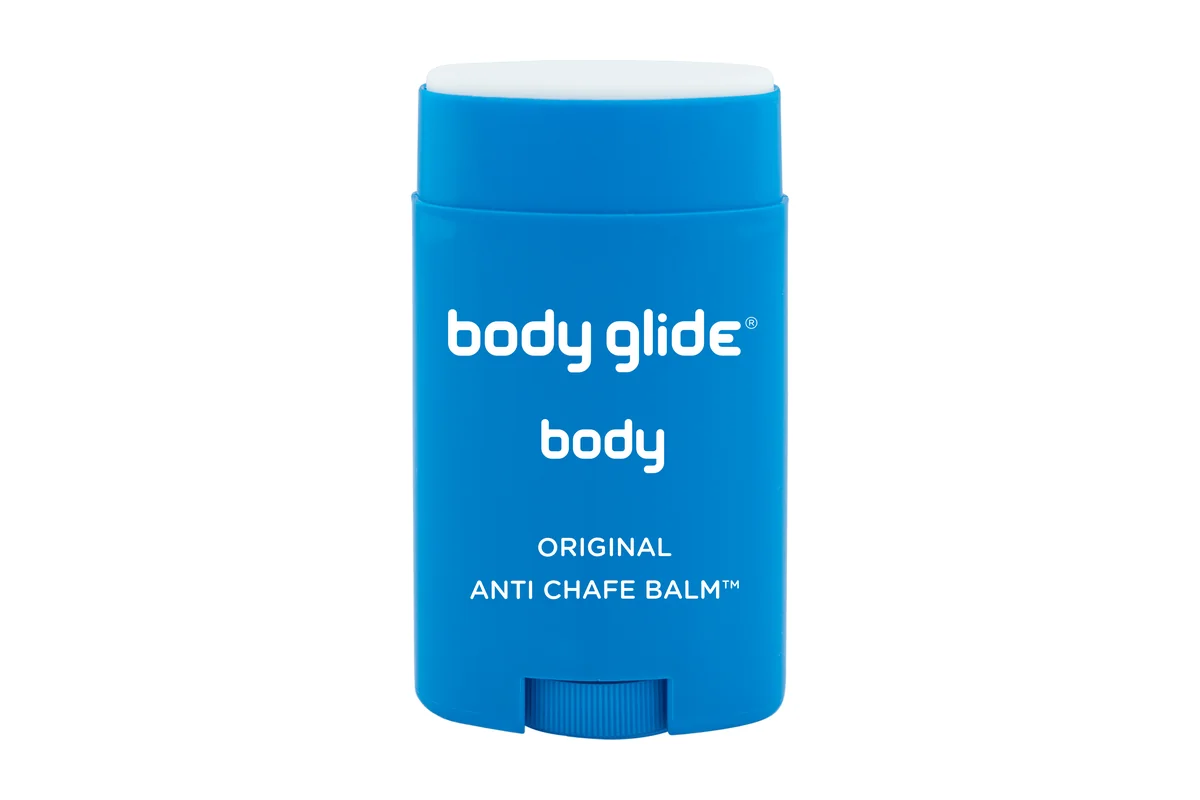
Solid stick · sweat and water resistant · thighs, underarms, bra edges, waistband
The default for a reason. It's dry to the touch, so it doesn't transfer to kit or hands; it applies in seconds standing up; and a stick lasts months of training. It resists sweat well and water reasonably, which covers everything short of a wet overnight ultra.
Watch out for: a light pass misses things. Go over the exact spot that rubbed last time, twice, before you get dressed. And it's a general stick, so for feet the Foot Glide below is shaped better.
Squirrel's Nut Butter
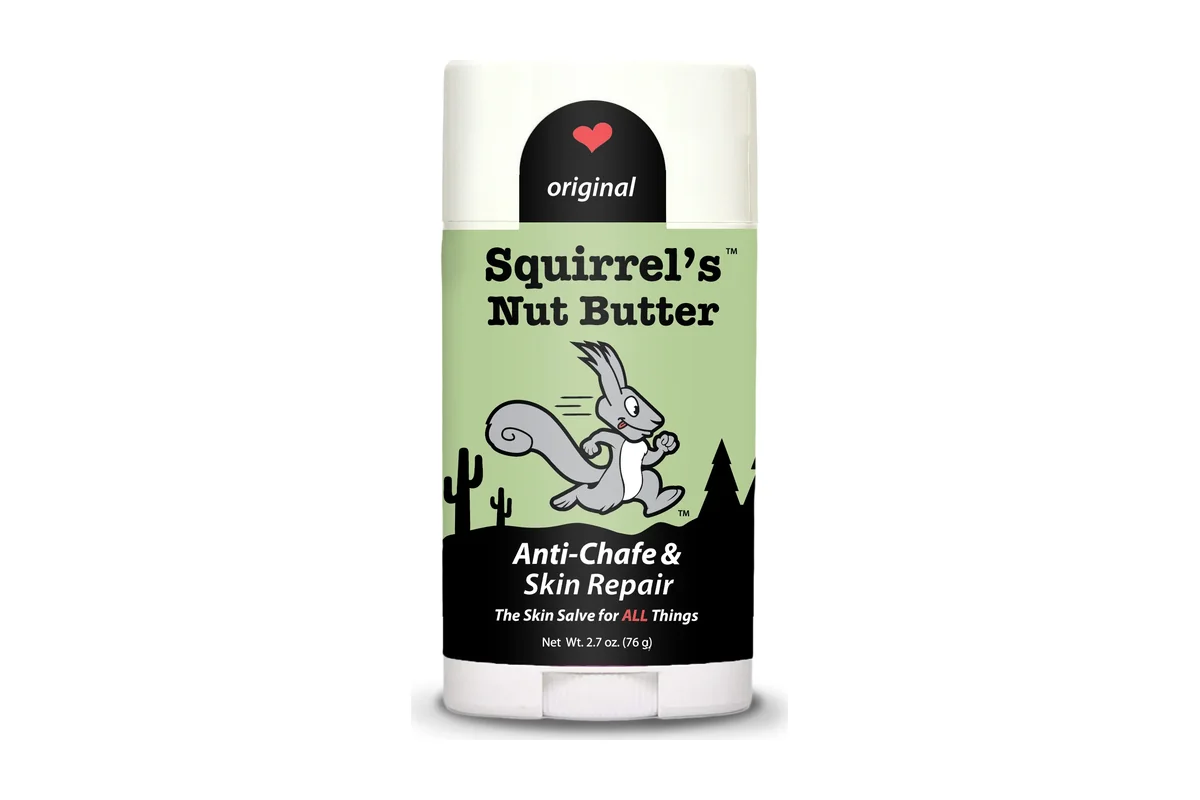
Salve, in a pot or a stick · natural-oil barrier · feet and everywhere else
The ultra runner's choice because you can put it on thick, it stays on through water, and it's happy on feet. That last point matters: at a checkpoint with wet socks off, one product for toes, heels and thighs is one fewer thing to find in the bag. The natural formulation suits people who react to petroleum products.
Watch out for: the pot is messy in a vest and worse with cold hands. Buy the stick, or decant a few grams into a tiny tub for the race. Check for nut allergies before gifting it.
Vaseline Petroleum Jelly
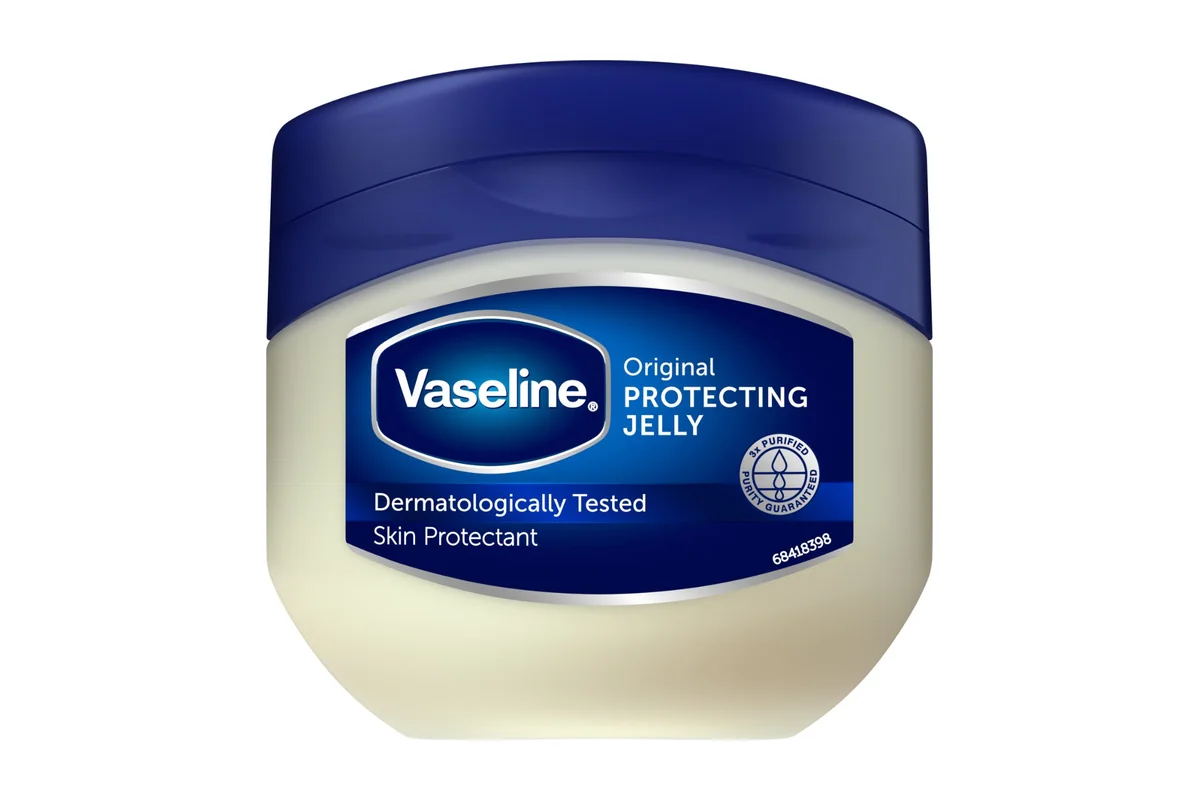
Petroleum jelly · strong moisture barrier · most skin
It works and it costs almost nothing, which is the whole case. The barrier is as good as anything here for a few hours, and there's a tub of it in every village shop between you and the finish.
Watch out for: it's greasy, it stains and marks technical fabric, and reapplying on the move gets it everywhere. It's the product you use because it's there, not the one you'd choose to carry.
Also considered
Seven more that work, each with a narrower case for buying it.
2Toms SportShield
A roll-on liquid that dries to a slick, silicone-like film, so it stays on in rain and heavy sweat where a balm rubs away. The pick if you want to apply once at the start of a wet race and forget it. Keep it off broken skin and wash your hands before you touch your eyes. Amazon
BodyGlide Foot Glide
The BodyGlide stick shaped and sold for feet: easier to get between toes and around heels before the socks go on. It doesn't fix shoes that are half a size out or socks that bunch, which cause more blisters than friction does. Amazon
Chamois Butt'r Original
A cycling cream that spreads over a large area far faster than a stick, which is the case for it on thighs, groin and multi-day events. Water-resistant but washes out of kit. Test it on your skin first and decant a race portion rather than carrying the tube. Amazon
TRISLIDE
A spray, for even coverage over big or awkward areas without rubbing anything in, and quick at a race start. Aim carefully, and don't spray it on a hard floor unless you want to fall over. Amazon
Salts Skin Slick
Another spray, aimed at triathlon and endurance, with the same appeal as TRISLIDE on feet and under wet clothing. Check what your event or airline says about aerosols before packing it. Amazon
Gold Bond Friction Defense
A general anti-rub stick, widely used in the US and often cheaper than the endurance brands. UK availability and even the formulation vary by importer, so check what you're actually getting. Amazon
Compeed Anti-Blister Stick
A tiny stick for a known hot spot on a heel or toe, small enough to forget it's in the race bag until you need it. It's a lubricant, not a dressing: once a blister has formed, cover it properly. Amazon
All ten at a glance
| Product | Best for | Format | Holds up in the wet? | Where |
|---|---|---|---|---|
| BodyGlide Original | Most runners, most runs | Dry stick | Sweat yes, long wet days less so | Thighs, underarms, bra edges, waistband |
| Squirrel's Nut Butter | Long and wet ultras | Salve, pot or stick | Yes | Feet and everywhere else |
| Vaseline | Cheap, everywhere | Petroleum jelly | Yes, but greasy | Most skin |
| 2Toms SportShield | Apply once, wet races | Roll-on liquid | Yes | Thighs, underarms, seams |
| BodyGlide Foot Glide | Feet | Dry stick | Sweat yes | Toes, heels |
| Chamois Butt'r Original | Large areas, multi-day | Cream | Yes, washes out | Thighs, groin |
| TRISLIDE | Quick, even coverage | Spray | Yes | Large or awkward areas |
| Salts Skin Slick | Spray for feet and body | Spray | Yes | Feet, under wet kit |
| Gold Bond Friction Defense | Budget stick, if you can find it | Dry stick | Moderate | Skin, thighs |
| Compeed Anti-Blister Stick | One known hot spot | Small stick | Moderate | Heels, toes |
What actually matters
Where. Inner thighs, underarms, the edges of a sports bra, the waistband, nipples, between the toes, the backs of the heels, and anywhere a wet vest strap moves. If it rubbed last time, it will rub this time.
Before, not after. On clean dry skin, before you get dressed. Once the skin is red the barrier is doing damage control, not prevention. On long wet events, reapply before it hurts, not when.
Lubricant or tape. Lubricant covers an area; tape protects a spot you already know about. Most people who've had a bad blister use both on feet, and nipples are a tape job, not a balm job.
Fix the cause. No product survives a vest that's too loose, a seam in the wrong place or shoes half a size out. If the same spot goes every time, the answer is the kit, not a thicker layer of balm.
Frequently asked questions
What is the best anti-chafe product for running?
BodyGlide Original for most runners: clean, portable and quick to apply. Squirrel's Nut Butter if you're running long and wet and need to reapply on feet.
Is Vaseline good for running chafing?
Yes. It's as good a barrier as anything for a few hours. It's also greasy, stains kit and is messy to reapply, which is why the dedicated sticks exist.
Can I put anti-chafe balm on my feet?
Yes, if it's made for skin. Between the toes, on the heels and on any known hot spot, before the socks go on. Squirrel's Nut Butter and Foot Glide are made for it.
How often should I reapply anti-chafe product?
When the barrier has worn off, which on a long wet day is before you feel anything. Work out the interval on a training run, not in a race.
What should I do once skin has chafed?
Clean it, protect it and stop the friction. Don't put anything on broken skin that isn't meant for broken skin; most of the products here sting badly on a raw patch.
Does anti-chafe balm prevent blisters?
It reduces friction, which is one cause. Fit, moisture, heat and how much your foot moves in the shoe are the others, and balm doesn't touch those.