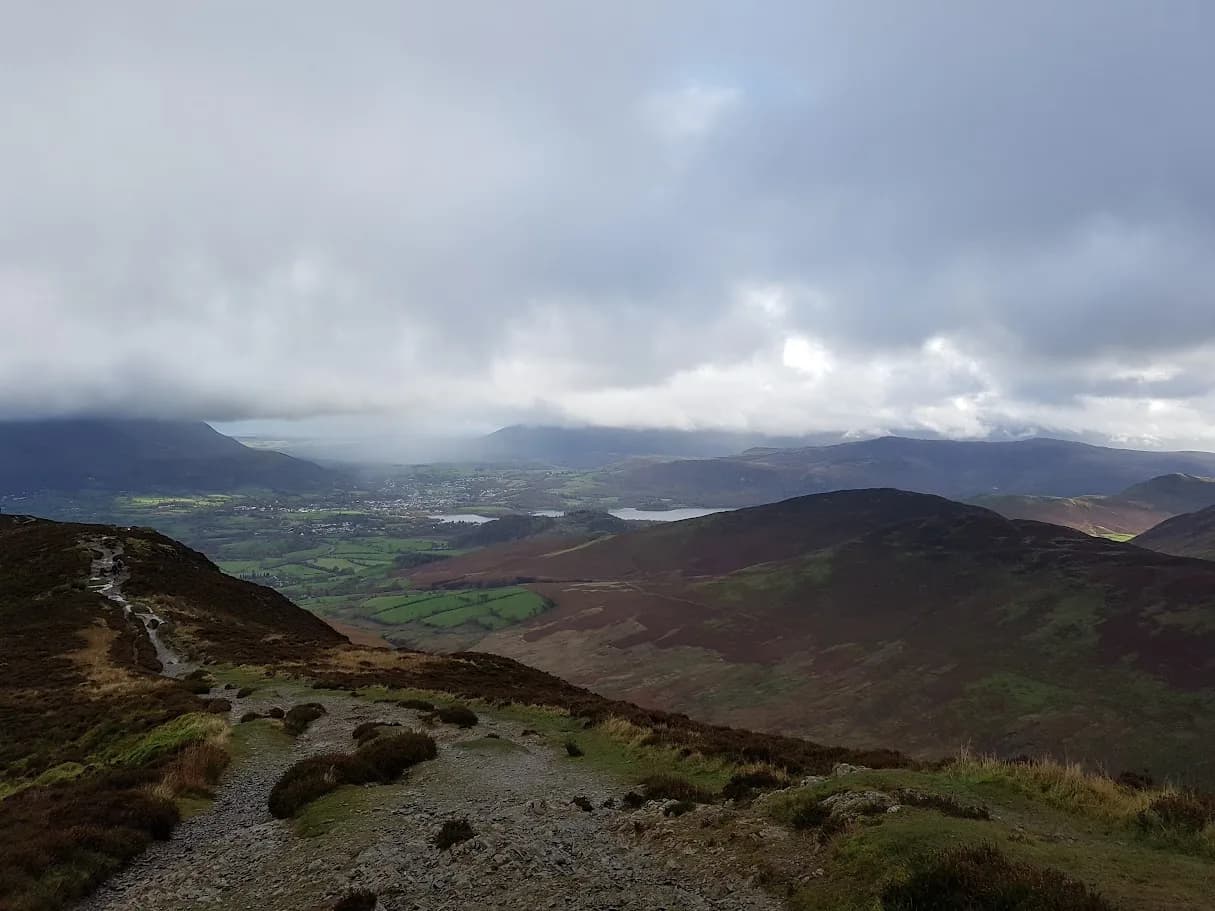
Best Lake District Trail Running Routes With Free GPX
Thirteen Lake District trail runs, 6km to 20.8km, all with free GPX: lake laps, Catbells, Helvellyn's edges, Coledale, Kentmere and Bob Graham Leg 1.
These are thirteen of our best Lake District routes, from a 6.0 km loop over Catbells to the 20.8 km first leg of the Bob Graham Round, with 21 m to 1,576 m of climb. They cover the full range: flat lake laps you can run in any season, small summits for a short morning, Helvellyn's two scrambling edges, and full horseshoe days above Coledale and Kentmere. Every route has a free GPX file, with no account and no email needed, and every grade is honest, so a Very Hard here means the same as a Very Hard anywhere else on the site.
Why the Lakes
Nowhere else in England packs this much mountain into one place. The fells are steep, the ridges are long and runnable, and the lakes give you flat, fast options for recovery days or bad weather. A fell is an open mountain or high hill, and a horseshoe is a loop that follows the ridge around the head of a valley. You'll meet both words a lot here.
The routes below come from five bases. Keswick has five of them, with Latrigg, Derwentwater, Catbells and the Bob Graham Leg 1 all starting in town and Coledale just up the road in Braithwaite. Staveley, on the Oxenholme to Windermere railway line, gives you the quieter Kentmere routes. Grasmere and the Thirlmere side of Helvellyn are both on the 555 bus, and Buttermere is reached by the seasonal Honister Rambler. For more detail on individual towns, see our guides to trail runs from Keswick and trail runs from Ambleside.
The routes at a glance
| Route | Distance | Ascent | Grade | Terrain | Base | Best for |
|---|---|---|---|---|---|---|
| Catbells from Hawes End | 6.0 km | 366 m | Moderate (E2·T2) | Fell, path | Hawes End | A first fell summit |
| Latrigg from Keswick | 8.3 km | 288 m | Moderate (E2·T2) | Fell, path | Keswick | A summit before breakfast |
| Helvellyn from Thirlmere | 10.7 km | 812 m | Very Hard (E4·T2) | Fell | Thirlmere | Helvellyn without the edges |
| Helvellyn via Swirral Edge and Striding Edge from Thirlmere | 11.3 km | 998 m | Very Hard (E4·T4) | Fell | Thirlmere | Both edges in one loop |
| Reston Scar and Brunt Knott | 12.6 km | 617 m | Hard (E3·T3) | Fell, woodland | Staveley | Quiet fell by train |
| Grasmere, Rydal Caves and the Coffin Route | 14.0 km | 192 m | Moderate (E2·T2) | Path, woodland | Grasmere | A low day with a cave in it |
| Derwentwater Round from Keswick | 14.6 km | 21 m | Moderate (E2·T1) | Path, woodland | Keswick | Flat, easy distance |
| Coledale Horseshoe | 14.8 km | 1,199 m | Very Hard (E4·T3) | Fell, path | Braithwaite | The classic ridge round |
| Catbells from Keswick | 16.8 km | 431 m | Hard (E3·T2) | Mixed, fell | Keswick | Catbells without the car |
| Buttermere and Crummock Water Circuit | 17.5 km | 80 m | Moderate (E2·T2) | Path, woodland | Buttermere | Two lakes, almost no climb |
| Staveley and Kentmere Valley | 17.7 km | 419 m | Hard (E3·T2) | Path, fell | Staveley | The Lakes without the crowds |
| Kentmere Horseshoe | 20.3 km | 1,108 m | Very Hard (E4·T3) | Fell, path | Kentmere | A big, remote horseshoe |
| Bob Graham Round Leg 1: Skiddaw and Blencathra | 20.8 km | 1,576 m | Expert (E5·T4) | Fell, moorland | Keswick | A Bob Graham recce |
Grades combine effort (E) and terrain (T). The grading explainer covers how we work them out.
Moderate: lake laps and low fells
Catbells from Hawes End
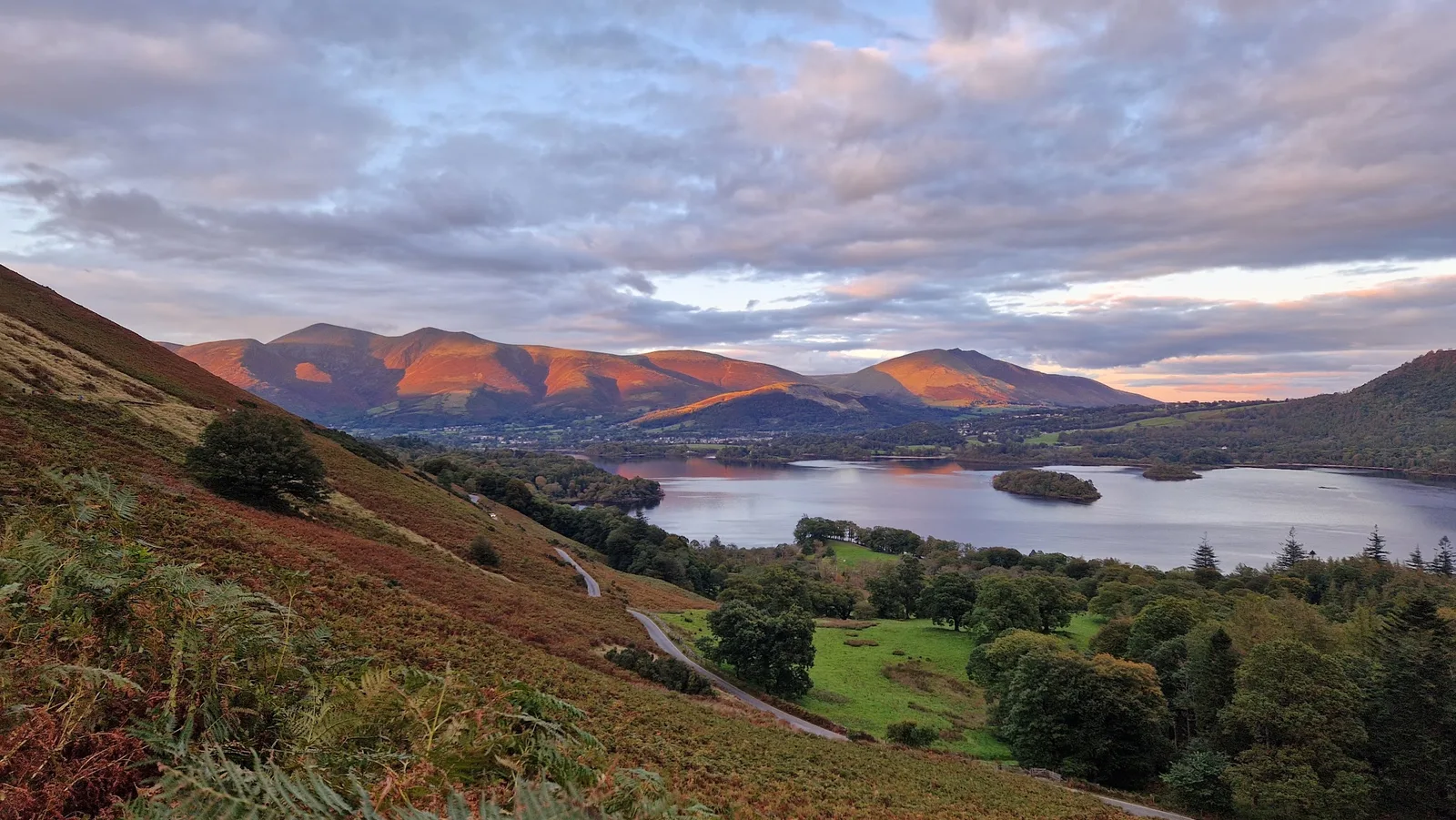
Catbells from Hawes End is a 6.0 km loop with 366 m of climb, graded Moderate (E2·T2), and takes 60 to 80 minutes. It's the quickest way onto Catbells, a 451 m summit that gives one of the best all-round views in the northern Lakes, and a good first taste of fell running.
From the Hawes End landing on the west side of Derwentwater you climb almost immediately onto the north ridge. The path is clear and well worn, steepening into a couple of short rocky steps near the top where you'll use your hands briefly. They're easy in the dry but slick in the wet, and the ridge is exposed to wind. The best way in is the Keswick Launch ferry to Hawes End. Parking at Gutherscale and Hawes End is roadside only, with around eight spaces on narrow lanes, and it fills very early. There's no water or toilets on the route, but the Lingholm Kitchen is a short way along the shore towards Keswick. It lists winter among its best seasons.
Catbells from Hawes End: route & free GPX →
Latrigg from Keswick
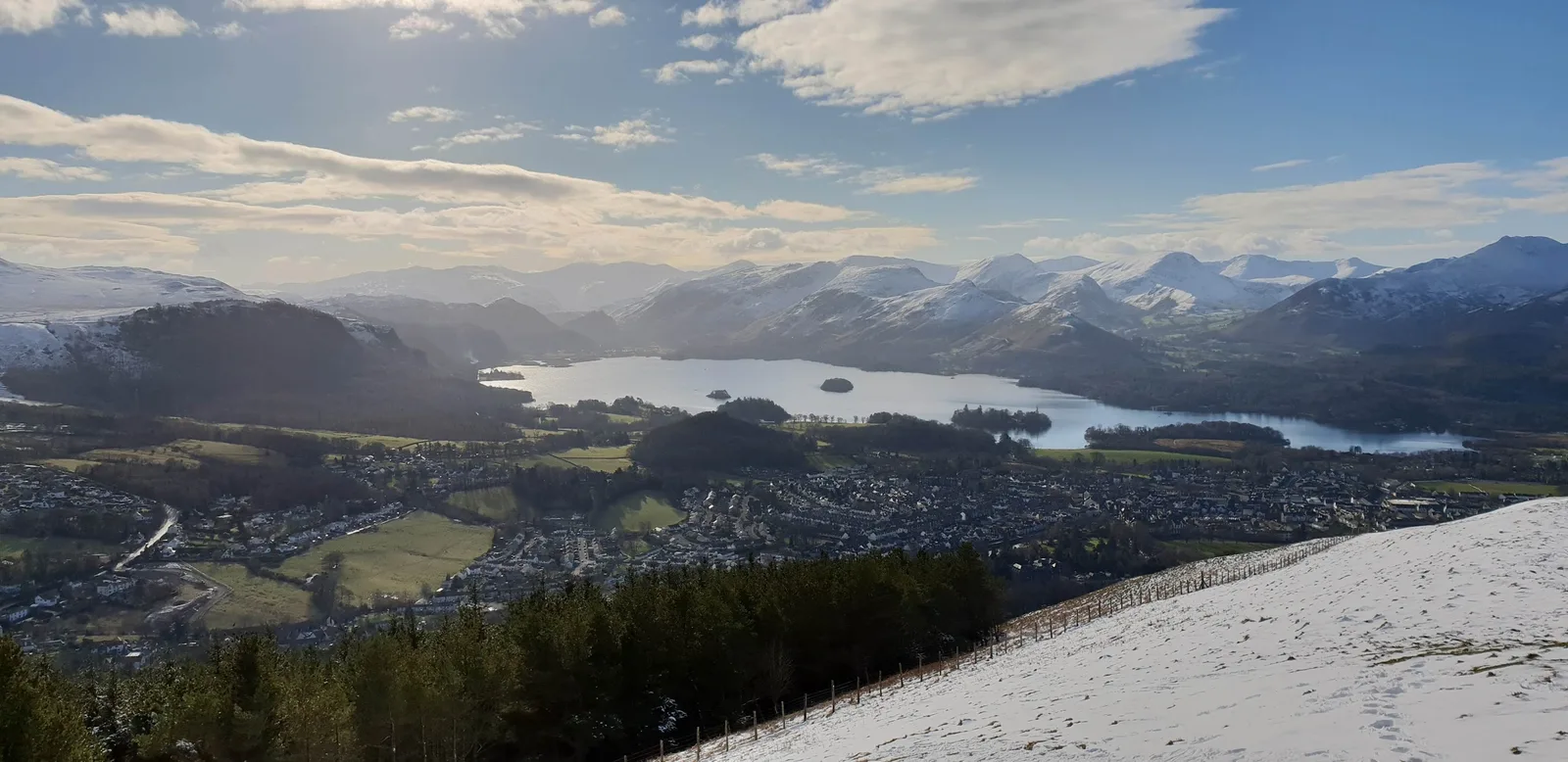
Latrigg from Keswick is an 8.3 km out-and-back with 288 m of climb, graded Moderate (E2·T2), taking 70 to 95 minutes. Latrigg is the green, rounded fell directly above Keswick, with Derwentwater stretching south into Borrowdale below you and Skiddaw rising straight behind.
From town you cross above the A66 and follow a well-graded zigzag path up the southern flank onto a broad grassy summit ridge. Take care crossing above the A66 near the start. The top is exposed to wind despite its modest height, and the grassy descent is slippery when wet. With a mud rating of 2 out of 5 and winter among its best seasons, it's a good year-round choice.
Latrigg from Keswick: route & free GPX →
Grasmere, Rydal Caves and the Coffin Route
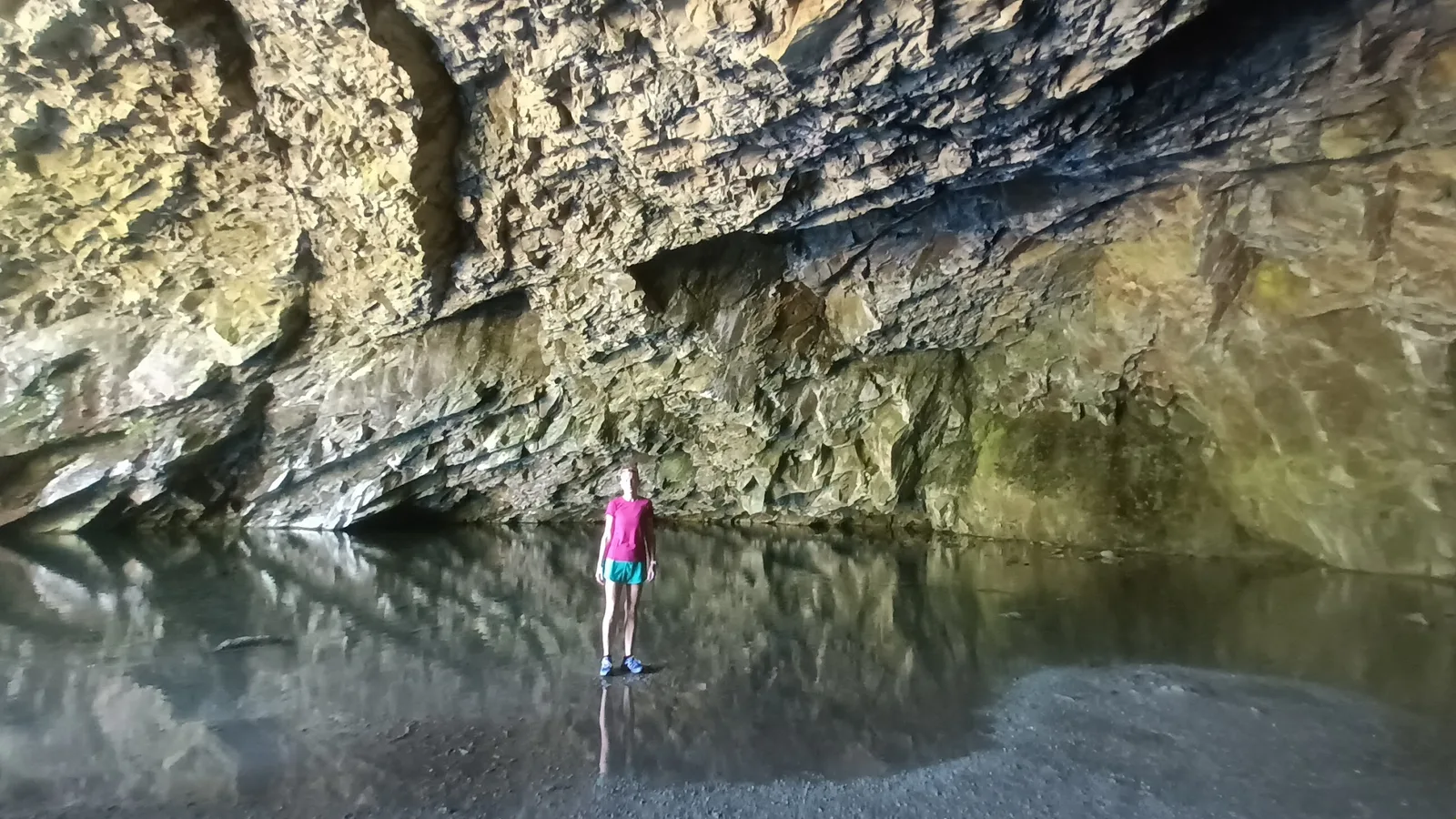
Grasmere, Rydal Caves and the Coffin Route is a 14.0 km loop with 192 m of climb, graded Moderate (E2·T2). Expect 100 to 135 minutes. It threads the valley between Grasmere and Ambleside and stays low all the way.
From Grasmere you head south past Rydal Water on shoreline paths, then take a short climb to Rydal Cave, a vast slate quarry chamber you can run right into, before dropping towards Ambleside and coming back on the old Coffin Route. The floor and approach to Rydal Cave are wet, rocky and slippery, and the inside is dark underfoot. The lakeside paths flood after heavy rain, and tree roots are slick in the wet. The 555 bus links Windermere, Ambleside, Rydal and Grasmere, so you can ride to either end. Stock Lane car park in Grasmere is pay and display with toilets nearby. It lists winter among its best seasons.
Grasmere, Rydal Caves and the Coffin Route: route & free GPX →
Derwentwater Round from Keswick
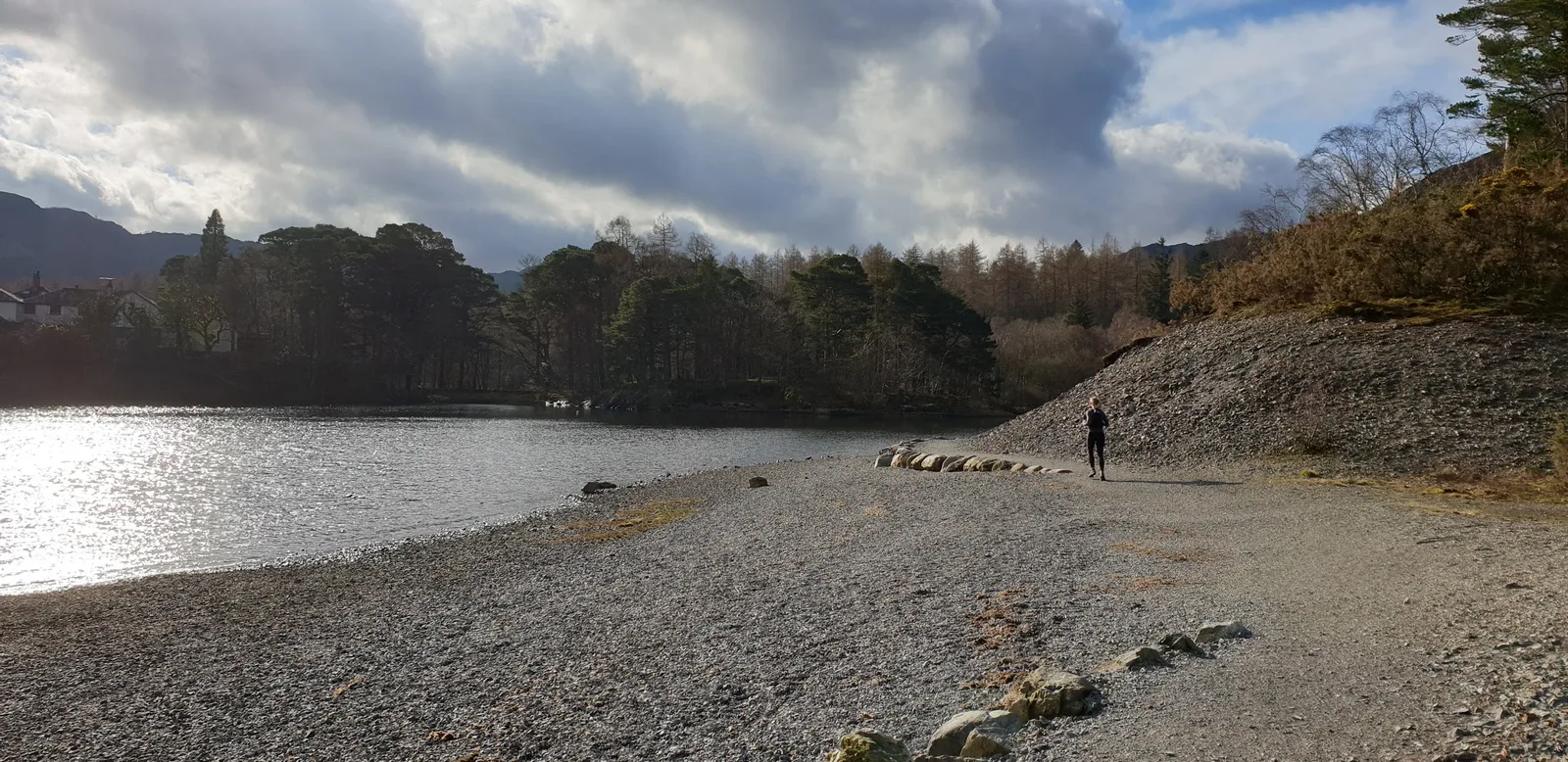
The Derwentwater Round from Keswick is a full 14.6 km lap of the lake with just 21 m of climb, graded Moderate (E2·T1), taking 95 to 125 minutes. It's the easiest distance run in the northern Lakes.
You follow the eastern shore through Great Wood beneath Walla Crag, cross the flat ground at the head of the lake, and come back along the quieter western shore past Brandelhow. The path is good throughout, but the low ground near the head of the lake floods readily after rain and can be ankle-deep in winter, and the roots and boardwalk are slippery when wet. The seasonal 78 Borrowdale Bus runs along the eastern shore if you want a shorter point-to-point.
Derwentwater Round from Keswick: route & free GPX →
Buttermere and Crummock Water Circuit
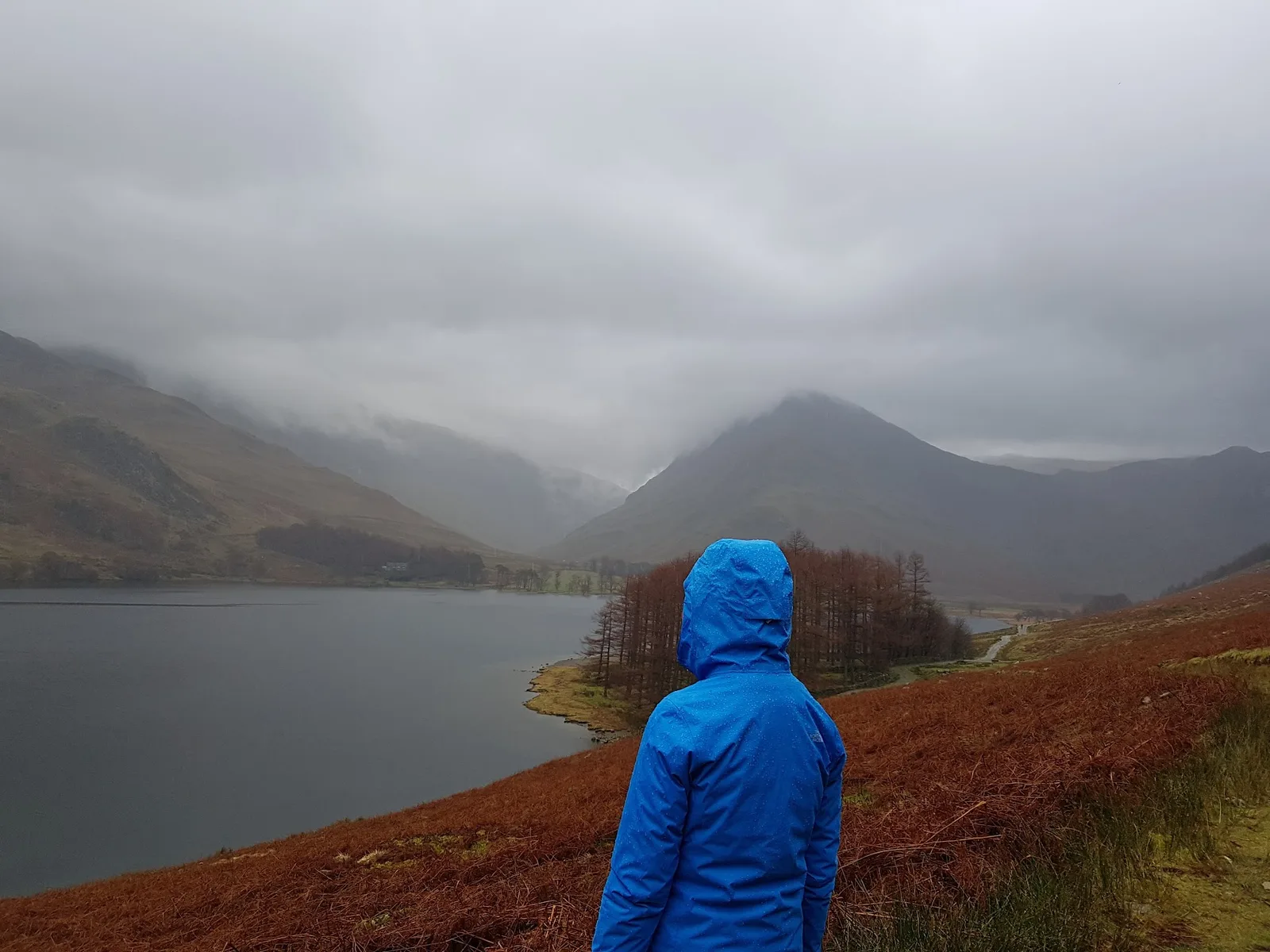
The Buttermere and Crummock Water Circuit is a 17.5 km loop with only 80 m of climb, graded Moderate (E2·T2). Most runners take 115 to 155 minutes. There are no fells to climb, so the effort comes purely from the distance, which makes it a good first go at a longer run.
From Buttermere village you follow the Buttermere shore beneath Fleetwith Pike and High Stile, passing through a short rock tunnel cut through the crag, then link across to Crummock Water. A few rocky and root-crossed sections near the shore are slippery when wet, the tunnel is low and dark, and the lake paths can flood after heavy rain. The National Trust car park in Buttermere is pay and display and fills early in summer. The seasonal Honister Rambler runs from Keswick. Syke Farm Tea Room, the Bridge Hotel and the Fish Inn are all at the start and finish. It lists winter among its best seasons.
Buttermere and Crummock Water Circuit: route & free GPX →
Hard: quieter fells and longer days
Reston Scar and Brunt Knott
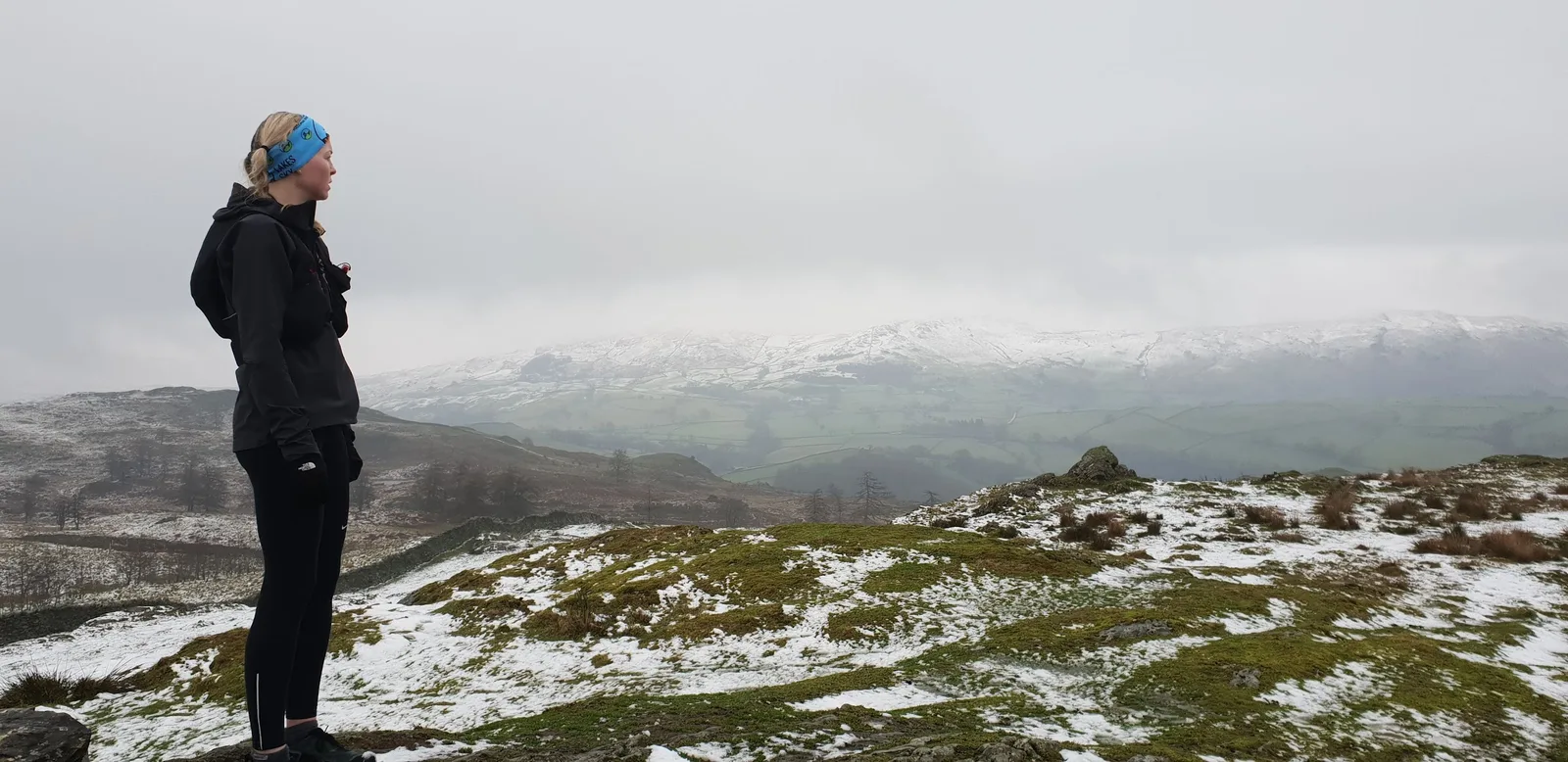
Reston Scar and Brunt Knott is a 12.6 km loop from Staveley with 617 m of climb, graded Hard (E3·T3), taking 115 to 155 minutes. It's genuine fell ground on a short day, without fighting for parking.
From Staveley the route climbs through woodland onto the rocky ground of Reston Scar, then onto open fell on Brunt Knott at 427 m, before returning along the Kentmere valley floor beside the River Kent. There are pathless sections on the higher fell, and the ground on Reston Scar is steep and needs care in the wet or ice. The route is marked as needing map skills, and navigation is complex in poor visibility, so carry a map and compass. The rough ground needs deep-lug shoes with real grip, and a windproof and waterproof layer is worth carrying. Staveley has a station on the Oxenholme to Windermere line and free roadside parking near Barley Bridge. It's a spring to autumn route, and the Hawkshead Brewery bar and kitchen is waiting at the end.
Reston Scar and Brunt Knott: route & free GPX →
Catbells from Keswick
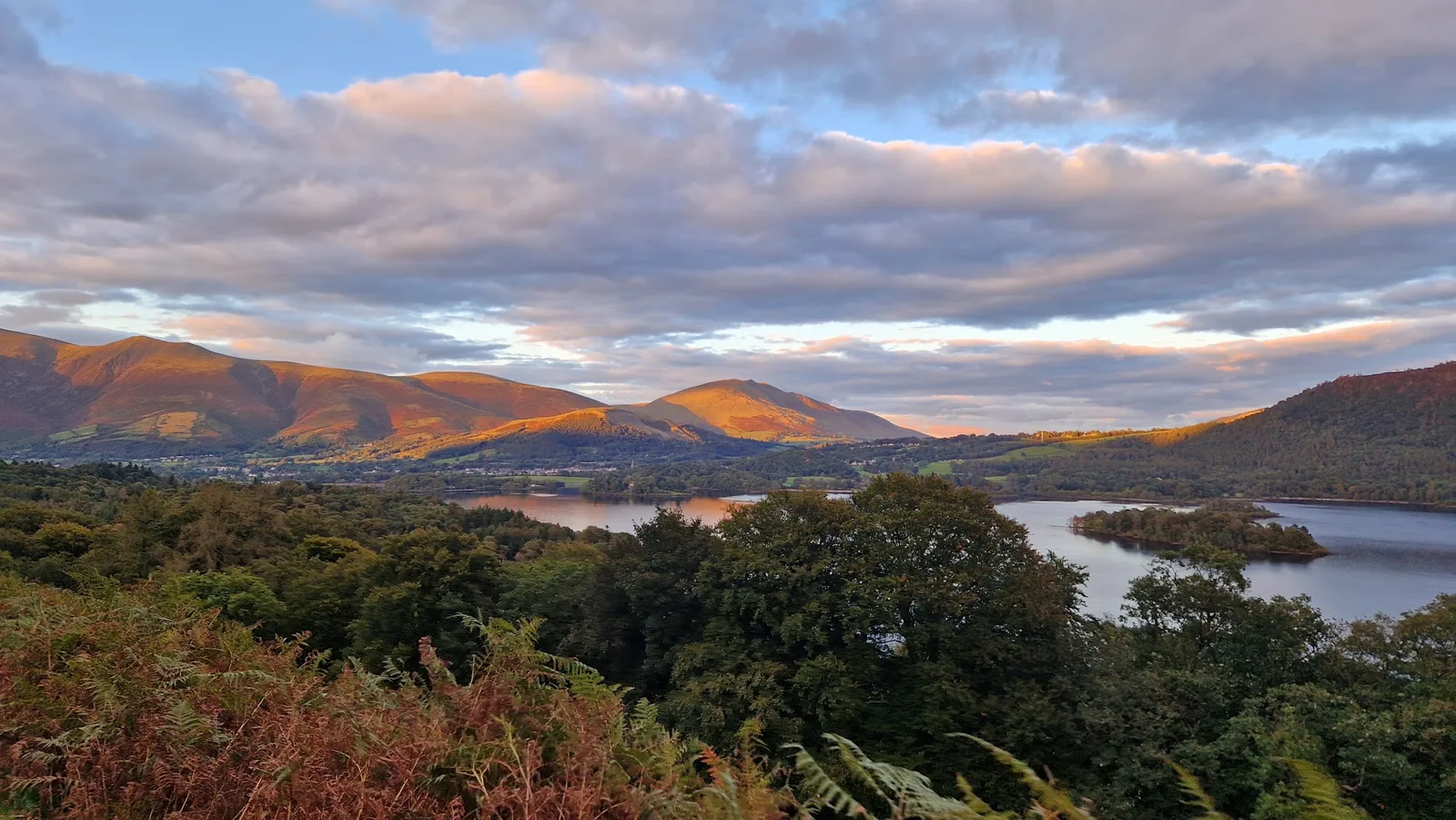
Catbells from Keswick is a 16.8 km loop with 431 m of climb, graded Hard (E3·T2) for the distance rather than the ground, and takes 130 to 175 minutes. Instead of driving to Hawes End, you run from Keswick along the shore of Derwentwater, climb the 451 m summit and loop back.
Most of it is very runnable, with a couple of rocky steps near the top that are slippery in the wet. The ridge is exposed to wind, and the lakeshore paths flood in places after prolonged rain. From the summit, Derwentwater is laid out below with Keswick at its head and Skiddaw and Blencathra to the north. It lists winter among its best seasons.
Catbells from Keswick: route & free GPX →
Staveley and Kentmere Valley
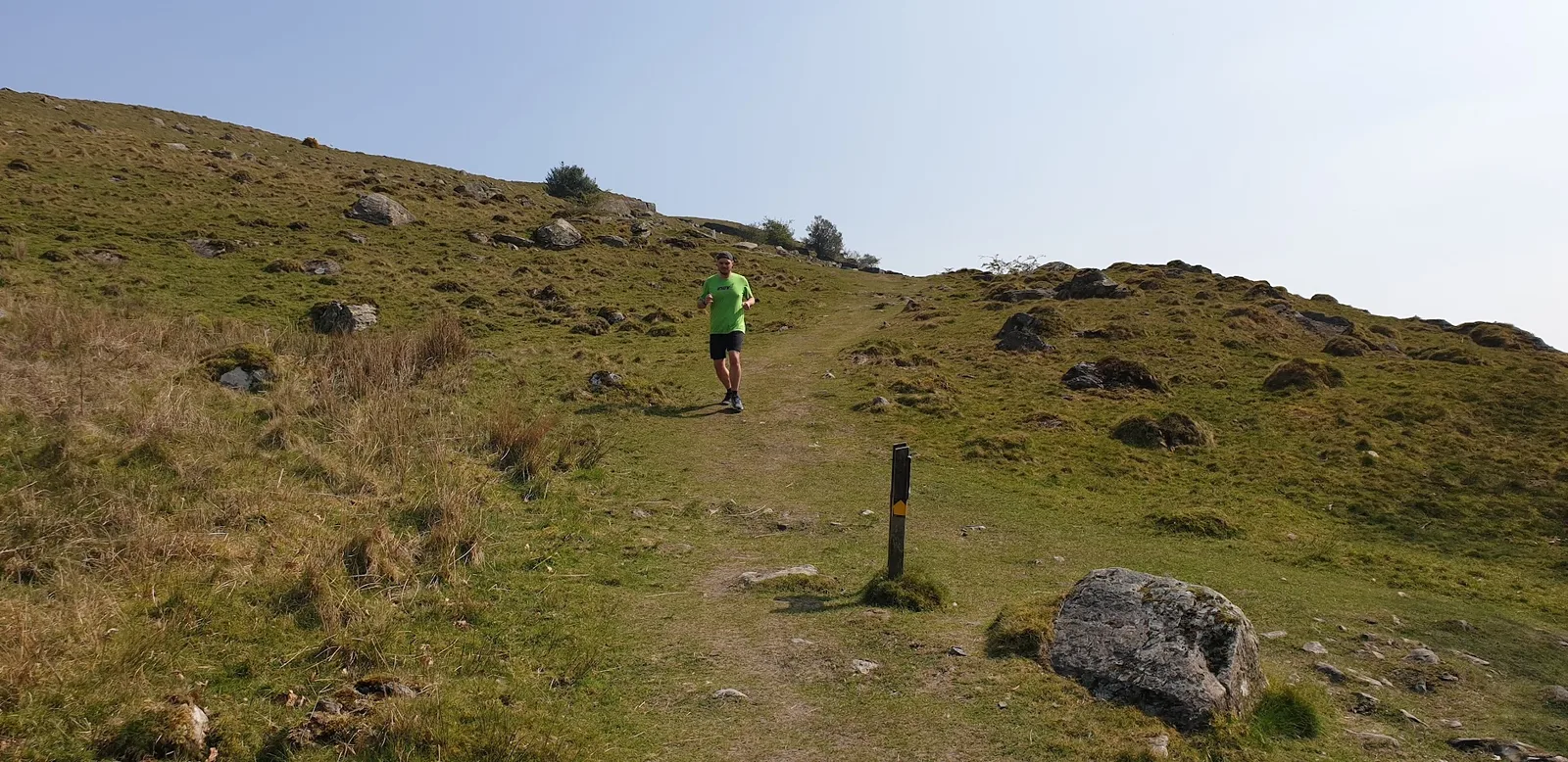
Staveley and Kentmere Valley is a 17.7 km loop with 419 m of climb, graded Hard (E3·T2), taking 135 to 185 minutes. It's low-key Lakes running on good tracks, with no crowds and easy navigation.
From Staveley the route heads north up the Kentmere valley beside the River Kent, then comes back on a different line over low fell east of the valley, with views down to the reservoir and up to the horseshoe ridges above. There's some navigation on the open hillside, and the river crossing points can be high after heavy rain. With a mud rating of 2 out of 5 on path and track, a light trail shoe is plenty. Staveley has its own station on the Windermere branch line and free roadside parking. It's a spring to autumn route, and the Hawkshead Brewery bar and kitchen does food all day.
Staveley and Kentmere Valley: route & free GPX →
Very Hard: Helvellyn and the horseshoes
Helvellyn from Thirlmere
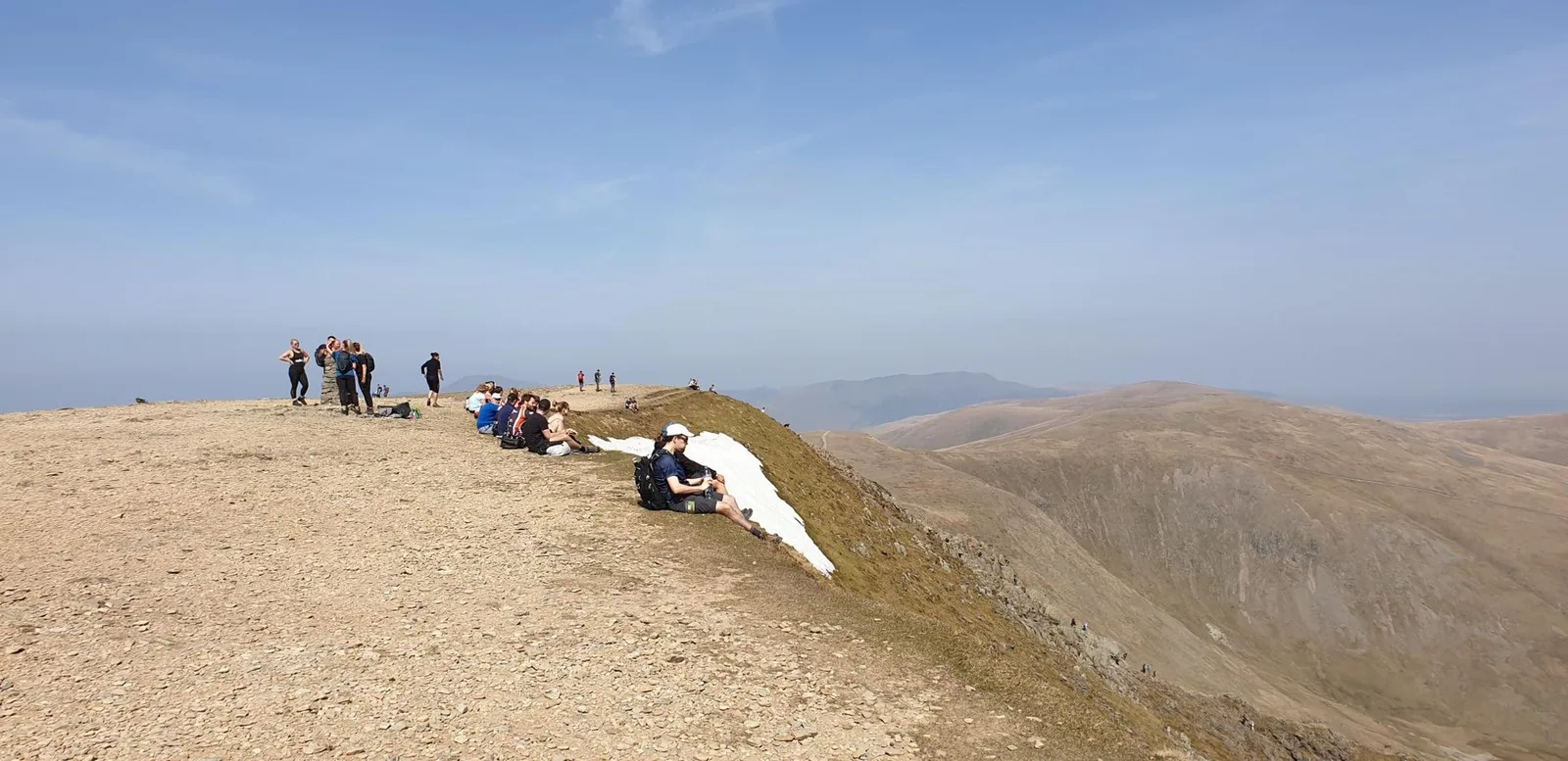
Helvellyn from Thirlmere is a 10.7 km loop with 812 m of climb, graded Very Hard (E4·T2) for the effort. Expect 115 to 155 minutes. It's the cleanest way up England's third-highest fell from the west.
From Swirls car park on the A591 you cross Helvellyn Gill and climb the steep, rebuilt path up Browncove Crags, gaining height fast with Thirlmere dropping away behind you. You top out near Helvellyn Lower Man before the final pull along the rim to the summit shelter. The summit plateau is featureless in cloud, and the east face drops sheer to Red Tarn, so keep well back from the edge, especially in winter. The upper path is rocky and exposed to weather coming over the top. The route is marked as needing map skills, so carry a map and compass and a windproof and waterproof layer. Swirls is pay and display, with 45 spaces, coins only and toilets next door. The 555 bus stops at Thirlspot, half a mile north. It's a spring to autumn route.
Helvellyn from Thirlmere: route & free GPX →
Helvellyn via Swirral Edge and Striding Edge from Thirlmere
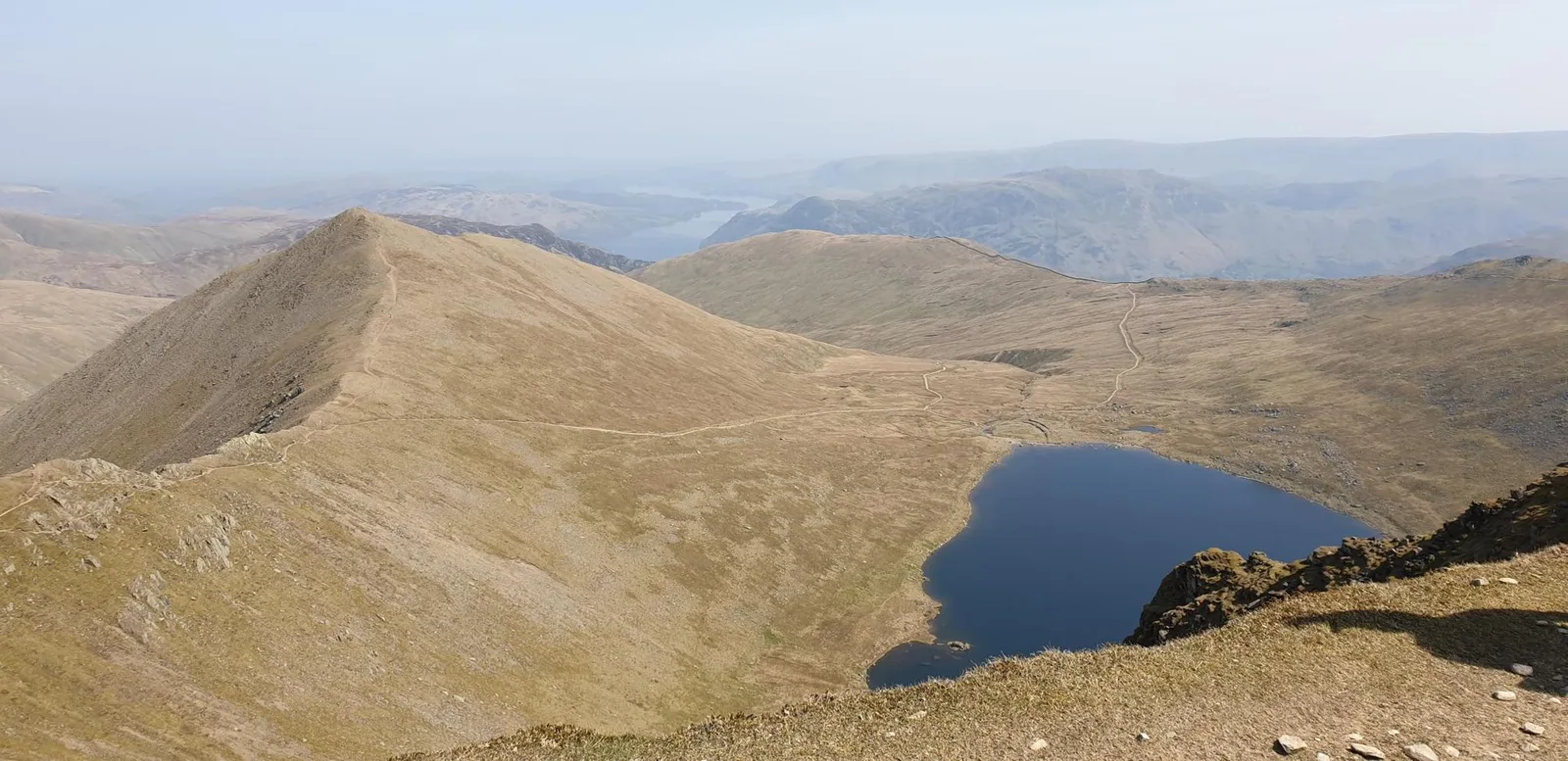
Helvellyn via Swirral Edge and Striding Edge from Thirlmere is an 11.3 km loop with 998 m of climb, graded Very Hard (E4·T4), and takes 125 to 170 minutes. It links Helvellyn's two famous ridges from the quieter Thirlmere side.
You climb out of Swirls on the made path towards Helvellyn Lower Man, drop east down Swirral Edge to the saddle below Catstye Cam with Red Tarn beneath you, then traverse Striding Edge back up to the summit before returning west to Thirlmere. Both edges are exposed grade 1 scrambles where a fall would be fatal, and they're treacherous when wet, iced or windy. The drop to Red Tarn is sheer. In winter, both edges need an axe, crampons and experience. Save this one for a clear, calm day, and if you're not comfortable with hands-on ground, run Helvellyn from Thirlmere instead. It's recorded as a summer and autumn route only. You'll want deep-lug shoes, a map and compass, and a windproof and waterproof layer.
Helvellyn via Swirral Edge and Striding Edge from Thirlmere: route & free GPX →
Coledale Horseshoe
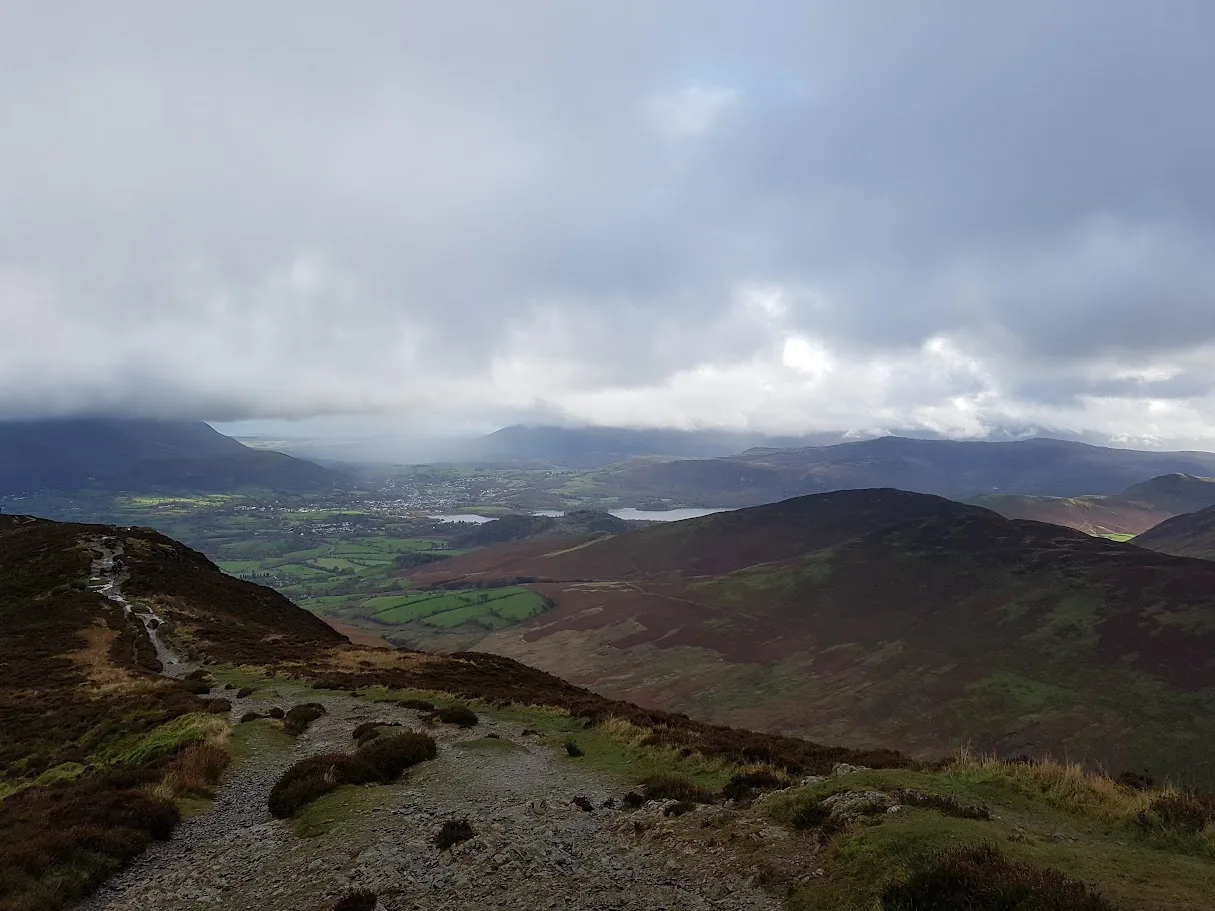
The Coledale Horseshoe is 14.8 km with 1,199 m of climb, graded Very Hard (E4·T3), taking 160 to 215 minutes. It starts in Braithwaite, 4 km from Keswick on the X4 and X5 bus route, with free roadside parking that fills by 8am at weekends.
You climb directly onto the north ridge of Grisedale Pike, then follow a high ridge over Hopegill Head to Crag Hill, at 839 m the highest point of the day, along to Sail and back down over Barrow. The ridges are exposed throughout and serious in strong wind, the stretch between Crag Hill and Sail needs compass work in cloud, and the descent off Grisedale Pike is steep. The route is marked as needing map skills. Wear deep-lug shoes and carry a windproof and waterproof layer. It's a spring to autumn route.
Coledale Horseshoe: route & free GPX →
Kentmere Horseshoe
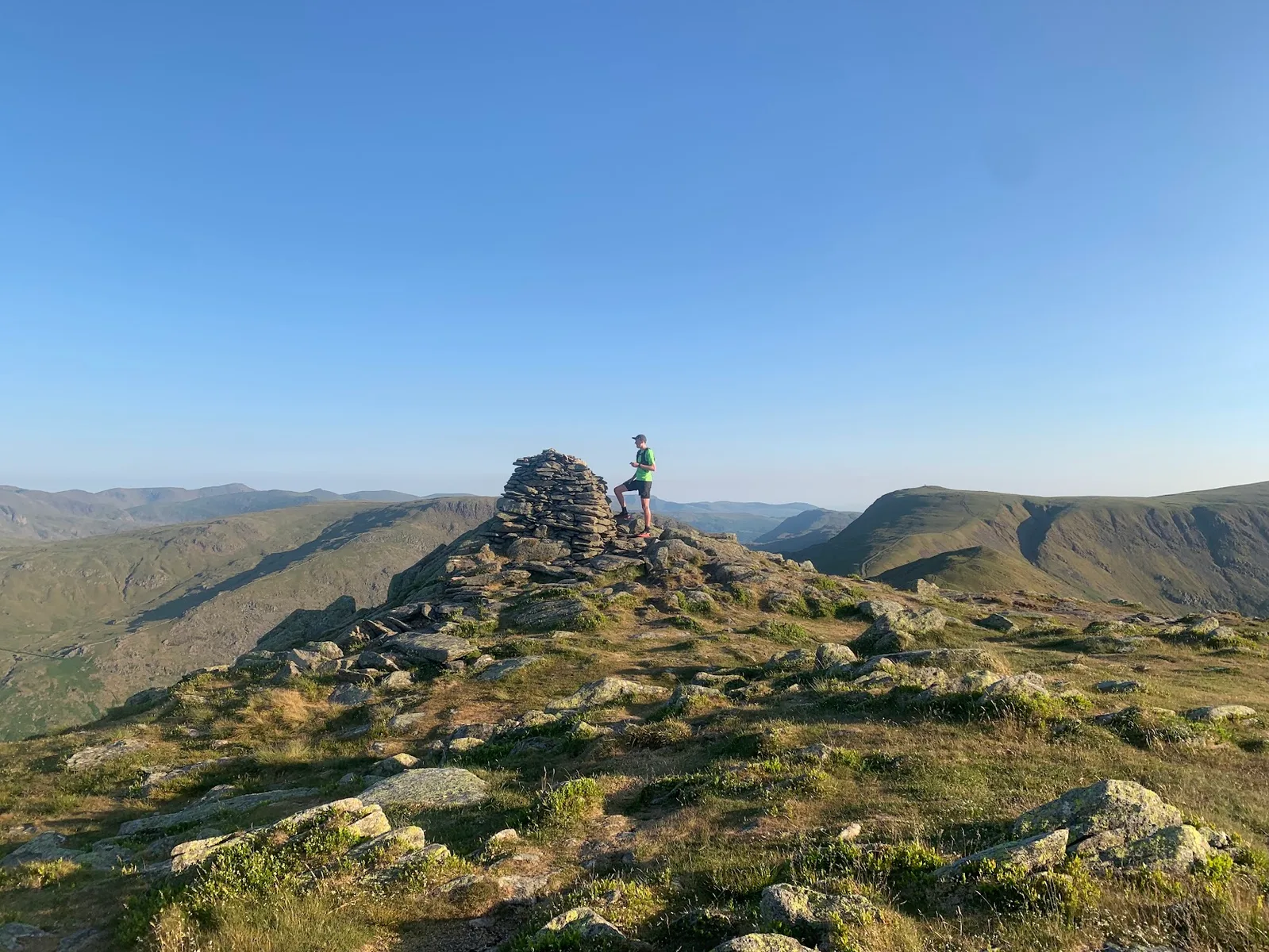
The Kentmere Horseshoe is 20.3 km with 1,108 m of climb, graded Very Hard (E4·T3). Most runners take between 3 hours 10 minutes and 4 hours 20 minutes. It circles the remote Kentmere valley on a high ridge.
From the hamlet of Kentmere the route climbs south to the Garburn Pass, gains the ridge at Yoke, and follows it over Ill Bell, Froswick, Thornthwaite Crag and Mardale Ill Bell, then round over Harter Fell and Kentmere Pike before dropping back to the valley. High Street, at 828 m, is the highest summit on the route. It's remote, a long way from help if you're injured, and the ridge is exposed in bad weather. The route is marked as needing map skills. At over 20 km, carry food and a proper water carry, along with deep-lug shoes and a windproof and waterproof layer.
The real problem is parking. There are around nine roadside spaces near Kentmere Institute, so arrive before 8am at weekends. An overflow field occasionally opens. There's no direct bus. The 44 and H1 run from Kendal to Staveley, 5 km away. It's a spring to autumn route, and the Hawkshead Brewery in Staveley is the post-run stop.
Kentmere Horseshoe: route & free GPX →
Expert: the Bob Graham
Bob Graham Round Leg 1: Skiddaw and Blencathra
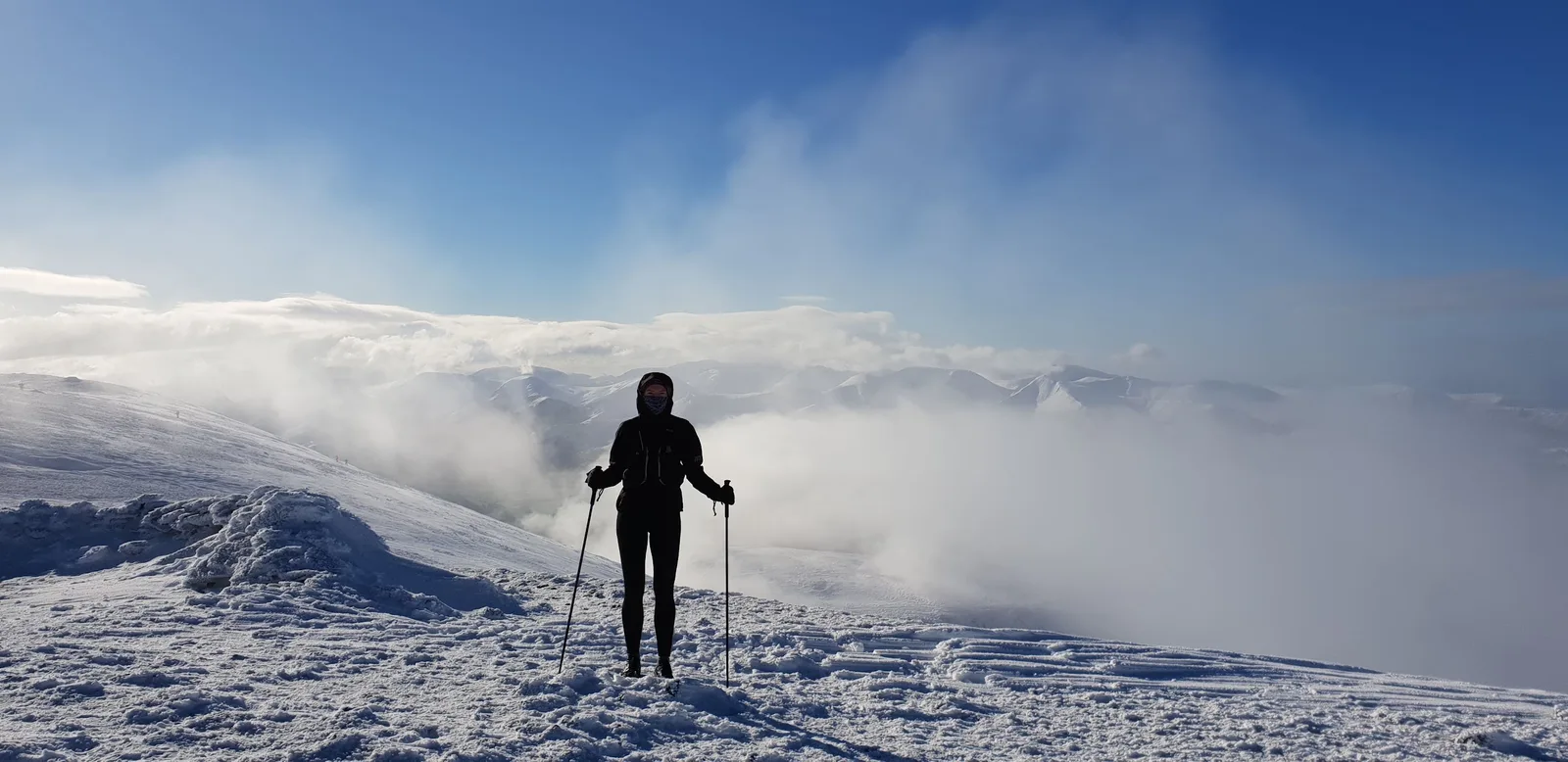
Bob Graham Round Leg 1: Skiddaw and Blencathra is the opening leg of the Bob Graham Round: 20.8 km point-to-point from the Moot Hall in Keswick to Threlkeld, with 1,576 m of climb. It's graded Expert (E5·T4), and most runners take between 3 hours 40 minutes and 4 hours 55 minutes. You don't have to do the whole round to run it, and it's the obvious leg to recce first.
From Keswick you climb past the flank of Latrigg and onto the broad Jenkin Hill path, the same firm track the Skiddaw fell racers use, to Skiddaw. You then drop east to Great Calva and make the high traverse to Blencathra, before descending to Threlkeld. The descent off Blencathra via Hall's Fell is narrow, rocky and exposed, with a short scramble, so avoid it in high wind or ice. The central ground around Skiddaw House is featureless and serious in cloud. The route is marked as needing map skills, and its hazard notes call map and compass skills essential. There's no water on the route, so carry food and a proper water carry, along with deep-lug shoes and a windproof and waterproof layer. The 555 or X4 brings you back from Threlkeld. It's a spring to autumn route.
Bob Graham Round Leg 1: Skiddaw and Blencathra: route & free GPX →
Practical notes
Getting there without a car. Staveley has its own station on the Oxenholme to Windermere line, and both Staveley routes start there. Keswick has no station, but the X4 and X5 run from Penrith railway station and the 555 runs through from Lancaster, Kendal and Windermere via Grasmere and Thirlspot. Latrigg, Derwentwater, Catbells from Keswick and the Bob Graham Leg 1 all start in Keswick. Buttermere is served by the seasonal Honister Rambler, and Hawes End by the Keswick Launch ferry. Kentmere is the hard one, with no direct bus.
Parking. Several starts have very little space. Hawes End has around eight roadside spaces, Kentmere around nine, and Braithwaite's roadside spaces fill by 8am at weekends. Swirls at Thirlmere has 45 pay and display spaces, coins only. Buttermere's National Trust car park fills early in summer. Keswick's Lakeside car park has around 250 spaces.
Terrain and weather. The fells make their own weather, and it changes fast with height. It can be calm in Keswick and dangerous on Helvellyn's edges. Always check the mountain forecast for the summit height, not the valley, and turn back if the wind is up on an exposed route. The lake routes are the ones that flood, especially the head of Derwentwater.
Seasons. Catbells from Hawes End, Latrigg, the Grasmere Coffin Route, the Derwentwater Round, Catbells from Keswick and the Buttermere circuit all list winter among their best seasons. The Helvellyn edges are summer and autumn only, and every other route is spring to autumn.
Safety. Ten of the thirteen routes go onto open fell. Read the safety page before a big day.
In an emergency call 999 or 112, ask for Police, then Mountain Rescue. If you have no signal you can text 999, but you have to pre-register first — text "register" to 999.
Kit. For the lake laps and low fells, a trail shoe with decent grip covers you. For Helvellyn, the horseshoes, Reston Scar and the Bob Graham leg, you'll want deep-lug shoes, a windproof and waterproof layer, and a map and compass. Six of the thirteen are marked as needing map skills. On Kentmere and the Bob Graham leg, carry food and a proper water carry. Our kit guides go into more detail.
Free GPX, condition reports and photos
Every route in this guide has a free GPX download on its route page, with no account and no email signup. Load it onto your watch or phone and go. If you've run one of these recently, add a condition report on the route page. It's the quickest way for the next runner to find out whether Striding Edge is iced or the head of Derwentwater is under water. For more routes across the national park, see the Lake District hub.
FAQ
What is the best Lake District trail run for beginners?
Catbells from Hawes End is a 6.0 km loop with 366 m of climb, graded Moderate (E2·T2), and gives you a real summit and a full Derwentwater view in about an hour. For flat distance, the Derwentwater Round from Keswick is 14.6 km with just 21 m of climb, also graded Moderate.
Are the Helvellyn edges safe to run?
Striding Edge and Swirral Edge are exposed grade 1 scrambles where a fall would be fatal, and they're treacherous when wet, iced or windy. Our route over both is graded Very Hard (E4·T4) and recorded as a summer and autumn route only. In winter they need an axe, crampons and experience. Helvellyn from Thirlmere reaches the same summit without the edges.
Can I run a Bob Graham Round leg without doing the whole round?
Yes. Bob Graham Round Leg 1: Skiddaw and Blencathra is a 20.8 km point-to-point from Keswick to Threlkeld with 1,576 m of climb, graded Expert, and has its own free GPX. The 555 or X4 bus brings you back from Threlkeld. Treat it as a serious mountain day in its own right.
Which Lake District routes can I run without a car?
Staveley has its own station, and both Staveley routes start there: Reston Scar and Brunt Knott, and Staveley and Kentmere Valley. From Keswick, which you can reach on the X4 and X5 from Penrith station, you can run Latrigg, the Derwentwater Round, Catbells and the Bob Graham Leg 1. The 555 bus serves Grasmere and stops at Thirlspot for Helvellyn.
Which Lake District routes are worth running in winter?
Six of the thirteen list winter among their best seasons: Catbells from Hawes End, Latrigg, the Grasmere Coffin Route, the Derwentwater Round, Catbells from Keswick, and the Buttermere and Crummock Water Circuit. The head of Derwentwater can be ankle-deep in winter. The Helvellyn edges need an axe, crampons and experience in winter conditions.
Are the GPX files free?
Yes. Every route on Trail Running Planet has a free GPX download on its route page, with no account and no email signup required.